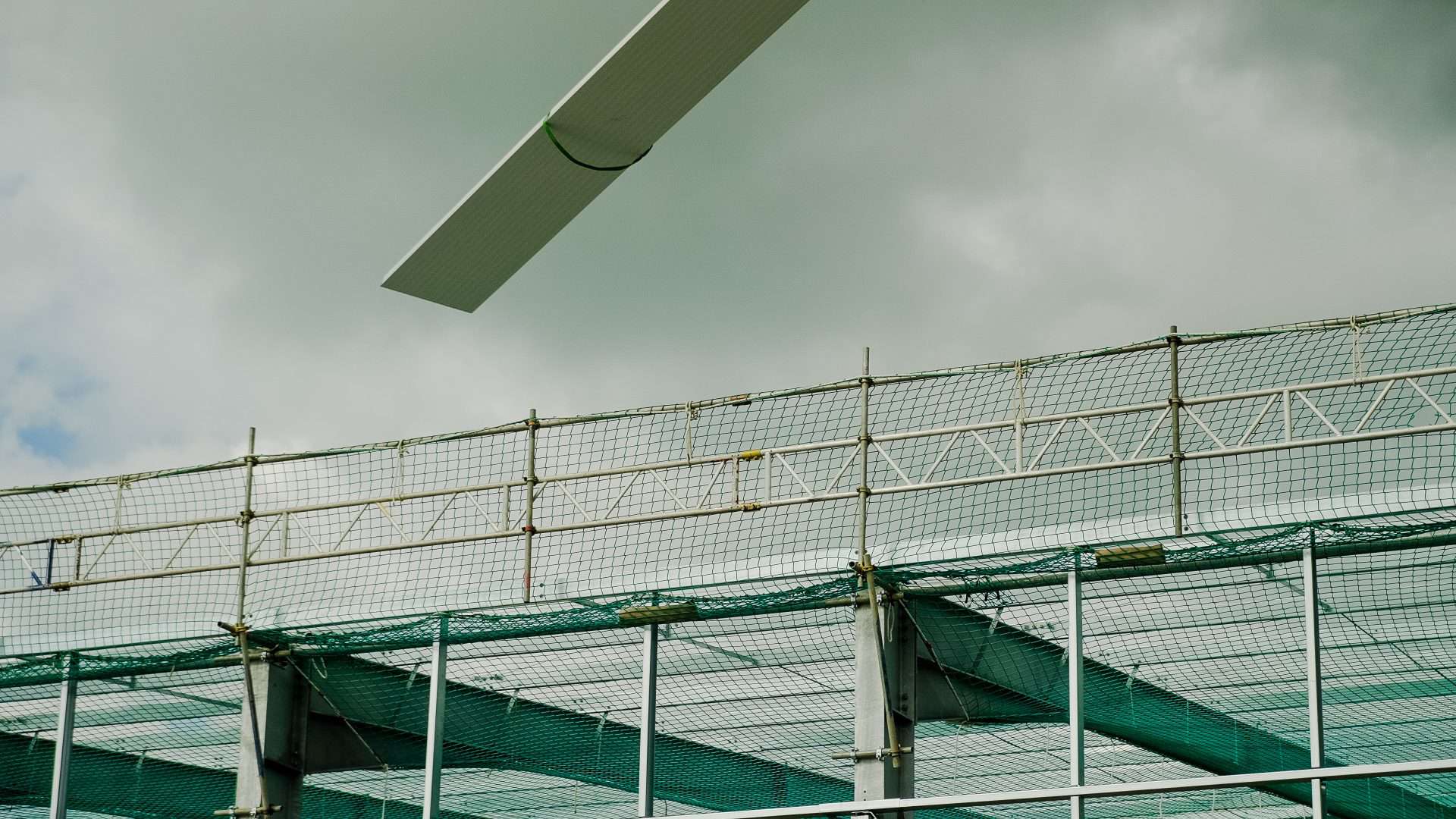
Safety nets perform as fall-arrest systems only if their anchorages perform. The net itself is rated to absorb a defined energy from a fall, but that absorption depends entirely on the anchorages holding when the net is loaded. An undersized or incorrectly specified anchorage point is the most common reason that a net fails to arrest a fall safely, and it is the most common reason that anchorage failures show up in HSE incident reviews.
BS EN 1263-2 sets out the requirements for net installation, including anchorage. The standard is specific about the loads that anchorages must accommodate, the spacing requirements, the methods of fixing to host structures, and the testing requirements before the net is brought into use. Compliance with the standard is not optional on UK construction sites. It is the baseline.
In practice, anchorage design varies widely with the host structure. Anchoring to structural steel uses different techniques and load assumptions from anchoring to reinforced concrete. Anchoring to scaffold tube uses different techniques from either. Anchoring to existing buildings on refurbishment work uses techniques that have to account for the actual condition and load capacity of the existing structure, which may not be as rated as the original design suggests.
The most common error is over-reliance on generic anchor specifications. A clamp designed for connection to a particular range of scaffold tube diameters performs differently if the tube is the wrong diameter. An anchor designed for solid concrete performs differently in lightweight aggregate concrete. A friction fitting designed for clean steel performs differently on painted steel. Each of these is a detail that has to be checked against the actual installation conditions, not assumed.
Red Safety Netting’s design process begins with the structural conditions of the site. Where nets are anchoring to scaffold, the scaffold structural design is reviewed for tube condition, tie pattern and load distribution. Where nets are anchoring to permanent structure, the structural details of the host are confirmed, including any post-installation modifications. Where the host structure is uncertain, additional design verification is performed before installation begins.
Load testing of anchorage points is required on certain installations and recommended on most others. The testing demonstrates that the anchorages can carry the design loads with the safety margins required by BS EN 1263-2. Testing records form part of the install pack delivered to the principal contractor and become part of the CDM file. Where load testing is not performed, the install pack should document the engineering justification for not performing it, against the conditions of the installation.
Inspection of anchorages after installation is an ongoing requirement. Anchorage conditions can change in service. Vibration from adjacent work can loosen friction fittings. Adjustment of scaffold ties can change the load profile on net anchor points. Corrosion of anchor fittings reduces load capacity. The inspection regime needs to include anchorage condition, not just net condition. Red Safety Netting includes anchorage inspection in the regular inspection cycle on schemes where the business holds the netting contract.
There is also a coordination requirement with other trades. Where other contractors interact with the structure to which net anchorages are fixed, including the scaffold contractor adding or removing ties, the principal contractor needs to ensure that the netting contractor is consulted before the changes are made. Modifications that affect anchorage performance, made without consultation, can compromise the netting safety case without anyone realising. Red Safety Netting flags these dependencies at design stage and includes them in the site coordination notes.
For schemes where the structure itself is being built during the netting installation period, the anchorage design has to be staged. Anchorages may need to be relocated as the structure develops. Each relocation is, effectively, a new install with its own design verification requirements. The cumulative documentation builds up across the package. Where the records are maintained as the work progresses, the position remains clear. Where they are reconstructed at the end of the package, gaps appear.
For developers, the practical implication is that anchorage design is one of the elements of safety netting that distinguishes a specialist contractor from a generic one. A specialist designs anchorages against the actual structure, tests where required, documents thoroughly, and inspects across the life of the install. A generic contractor uses standard specifications and relies on the absence of incidents as evidence of safety. The two approaches look identical on a tender. They look very different on a CDM file and in an incident review.
Talk to Red Safety Netting To discuss anchorage design and load testing for safety netting on your scheme, contact Red Safety Netting on 01223 890727 or email enquiries@theglobegroup.co.uk.