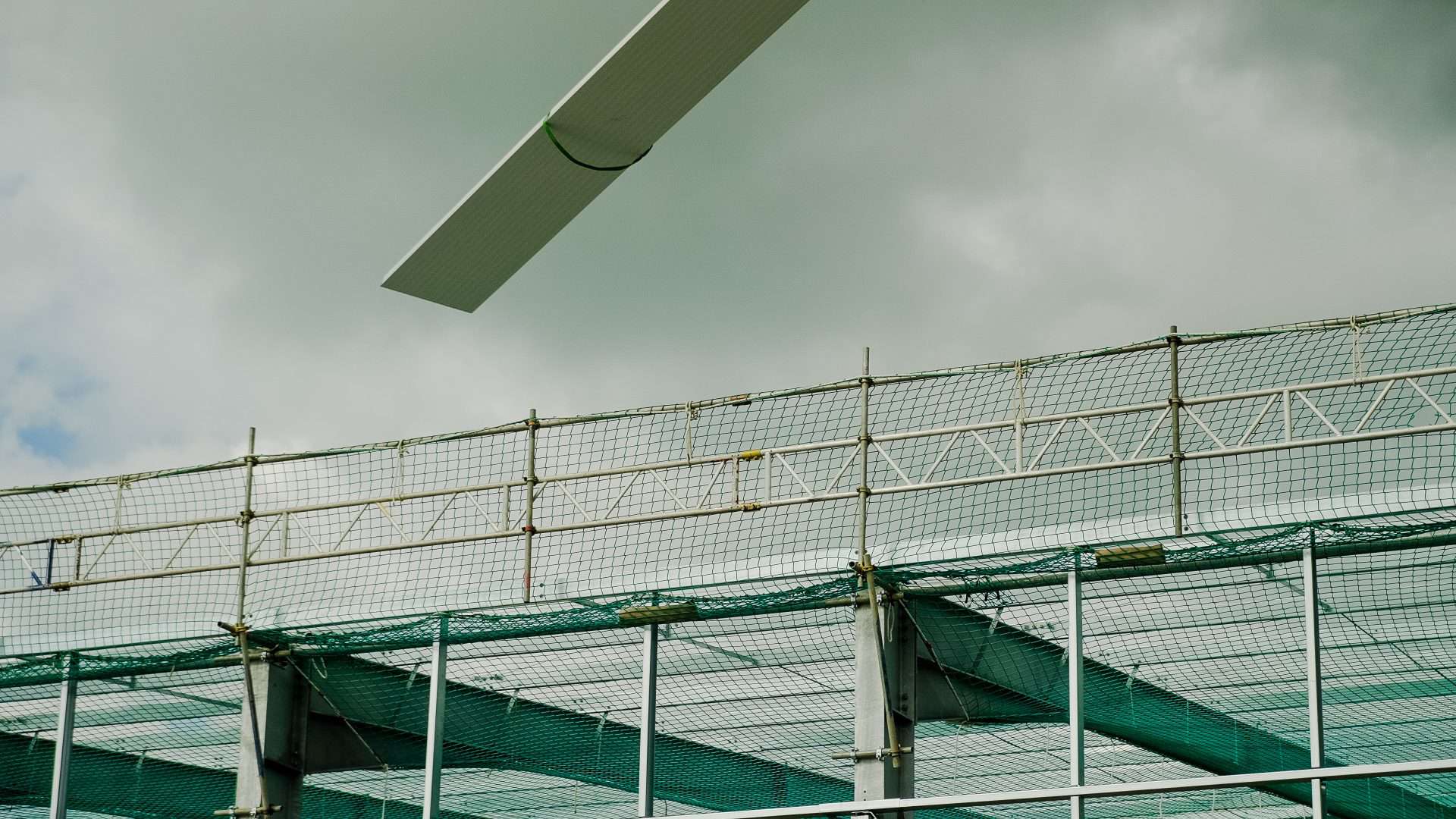
The interface between scaffold and safety netting is one of the more underrated coordination points on a construction site. The two systems share physical space, share fixing points and share inspection cycles. They are also installed and removed in a sequence that has direct implications for the trades working between them. When the coordination works well, none of this is visible. When it fails, programme weeks are lost.
The most common failure mode is sequencing. Safety nets installed before the scaffold is fully tied lose anchorage stability as ties are added. Safety nets installed after the scaffold is fully sheeted may need rework as sheeting is repositioned. Scaffold modifications made without consulting the netting installer can leave nets unsupported or under-sized for the new geometry. Each of these is preventable through joint planning. None is prevented through serial procurement.
Red Safety Netting works most efficiently on schemes where the scaffold and the netting are designed together at planning stage. The scaffold drawing shows the netting positions, the netting fixing points, the clearance zones beneath the catch areas, and the access routes for the netting installer. The netting drawing shows the same elements from the netting side. The two drawings are consistent because they are coordinated before either is finalised.
This is the operational reason Red Safety Netting sits within the same group as Globe Cambridge. On schemes where both businesses are appointed, the two trades share design conversations, joint method statements and joint site supervision arrangements. The principal contractor receives a single coordinated fall protection package rather than two separate packages that have to be reconciled on site.
On schemes where Red Safety Netting is appointed alongside a third-party scaffold contractor, the same integration is achievable but requires the scaffold contractor to engage. Red Safety Netting’s standard practice is to request scaffold drawings before quoting on a scheme, to request a joint planning meeting before installation, and to maintain a documented set of coordination notes through the duration of the package. Where the scaffold contractor reciprocates, the coordination works well. Where they do not, Red Safety Netting flags it to the principal contractor early.
During live installation, the practical coordination items include access for the netting installation crew, lifting arrangements for net rolls and tools, and the timing of scaffold modifications relative to net installation phases. None of these are exotic. All of them benefit from being agreed in advance rather than improvised on the day. Red Safety Netting maintains a coordination log on every site, recording agreed positions, agreed sequences and any deviations.
Inspection coordination is the second area where the two trades interact frequently. Scaffold inspections are required at seven-day intervals. Safety netting inspections are required at intervals defined by the install method statement, typically weekly during use and after any incident affecting the nets. The two inspection cycles are usefully run together where possible, both because it reduces the inspection load on the principal contractor and because issues in one system frequently affect the other.
Adverse weather is another point of joint relevance. High winds affecting scaffold also affect netting. Heavy rain can change the catch performance of certain net types. Snow accumulation on nets carries a load risk. Where the scaffold and netting are managed by the same site supervisor, or by closely coordinated supervisors, weather response is faster and more consistent. Red Safety Netting’s adverse weather protocol is coordinated with Globe Cambridge’s scaffold weather protocol where the two are on the same site.
Decommissioning at the end of the build phase is the final point where coordination matters. Nets are removed in a specific sequence relative to scaffold dismantling. Where the order is wrong, nets either prevent scaffold removal or are removed before the residual fall risk has been eliminated. The right sequence is agreed at planning stage and confirmed at the relevant inspection point. Red Safety Netting documents the dismantling sequence as part of the package handover.
For developers and principal contractors, the practical message is that the coordination between scaffold and safety netting is best treated as a single planning conversation rather than as two separate procurement decisions. Where the two services are sourced as a coordinated package, the friction on site drops materially. Where they are sourced separately, the principal contractor should expect to mediate the coordination actively rather than treat it as something the subcontractors will resolve between them.
Talk to Red Safety Netting To discuss coordinated scaffold and safety netting on your scheme on your scheme, contact Red Safety Netting on 01223 890727 or email enquiries@theglobegroup.co.uk.