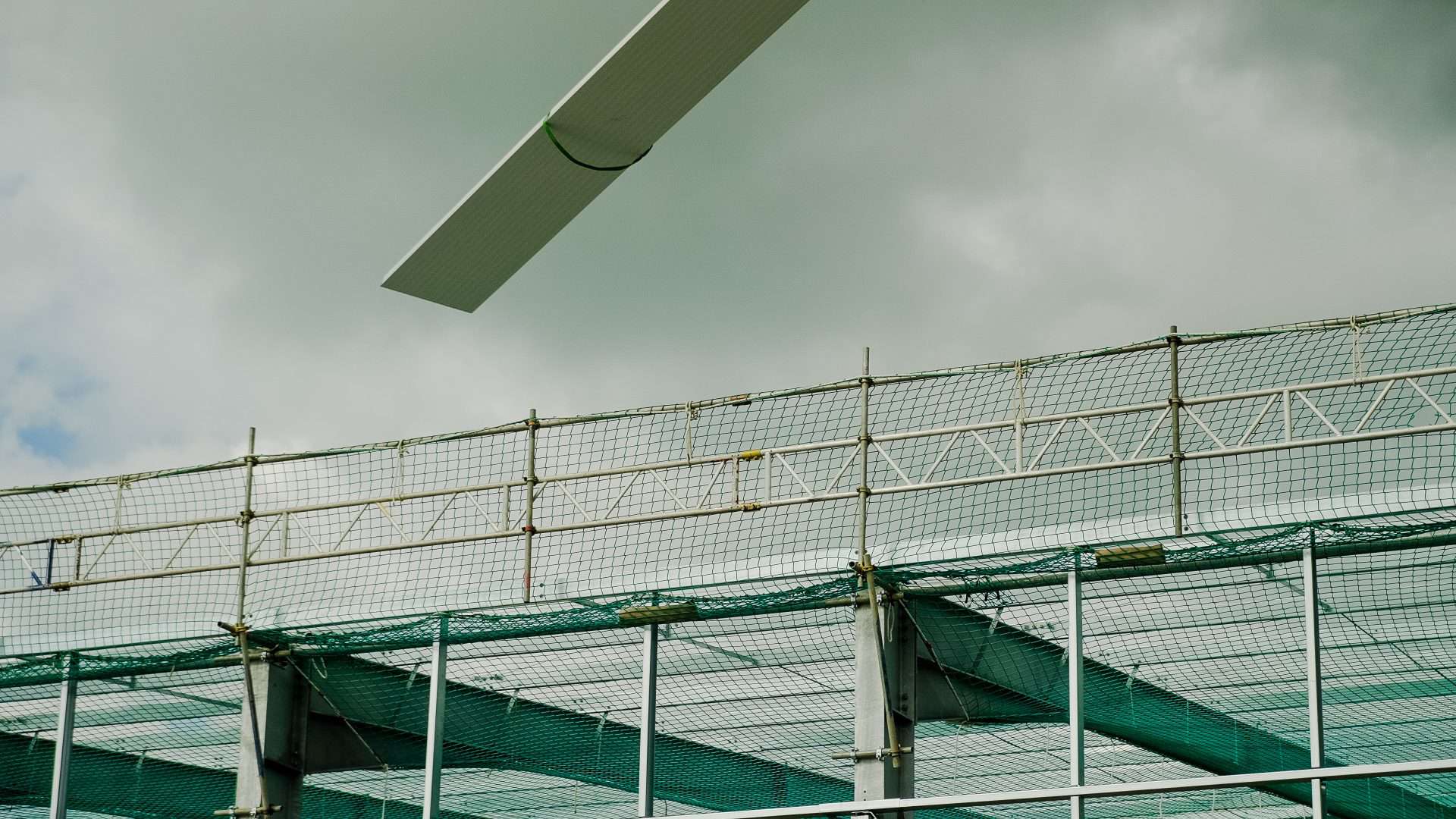
You rely on debris netting to create a protective barrier that prevents falling materials from striking workers or passers-by, reducing the risk of injuries and fatalities. Properly installed and inspected netting contains fragments and tools, shields the public and minimises site downtime, while helping you meet legal and safety standards and maintain site productivity.
Importance of Debris Netting
On dense urban sites you depend on debris netting to contain fragments, tools and masonry that would otherwise fall beyond the work area. HSE guidance and standards such as BS EN 1263-1 endorse containment nets as part of layered protection, and properly installed netting can arrest impacts with energies equivalent to several hundred joules, markedly reducing the likelihood of fatal or life‑changing injuries and expensive public liability claims.
Worker Safety
You use debris netting to shield operatives on lower levels from falling objects; a loose 5 kg tool dropped from 10 m carries roughly 490 J of energy, enough to cause severe head trauma even through hard hats. Nets intercept such hazards, limit bounce‑back and prevent secondary strikes, and when combined with correct anchorage and routine inspection they reduce on‑site injury rates more effectively than PPE alone.
Public Protection
You protect pedestrians and passing traffic by deploying nets across scaffold façades and hoardings to trap bricks, glass and small rubble that would pose significant risk on busy streets. Well‑tensioned netting minimises debris spread, keeps pavements open where safe to do so and lowers the chance of site shutdowns or prosecutions following an incident.
You should also specify net strength, mesh size and overlap for the task: choose nets rated for anticipated loads, secure them to structural anchors with certified fixings, and inspect daily and after high winds. Combining netting with exclusion zones, clear signage and regular documentation further reduces public exposure and evidences compliance during audits or after any near‑miss.
Types of Debris Netting
You choose net types by task: containment nets for falling material, safety nets beneath working levels, and perimeter screens for windblown dust and small debris; mesh apertures typically range from 10mm to 100mm and many systems meet BS EN 1263 standards. You will notice heavy-duty nets used above 20m on tower blocks and lightweight nylons for internal refurbishments. The The Role of Debris Netting in Construction Safety – SP Group provides detailed specifications.
- Containment nets
- Safety nets
- Perimeter screens
- Scaffold-integrated nets
- Flame-retardant nets
| Net Type | Primary Use / Feature |
| Containment (HDPE) | Captures bricks, tools; used on façade works up to 50m |
| Safety nets | Personnel fall arrest beneath platforms; tested to EN 1263-1 |
| Perimeter screens | Controls dust and small debris; improves site public safety |
| Flame-retardant nets | Used on sites with hot works; reduces ignition risk |
| Scaffold-integrated | Quick to deploy around scaffolds; supports modular installation |
Materials Used
When you evaluate materials, high-density polyethylene (HDPE) and UV-stabilised polyethylene dominate for their durability and resistance to rot; nylon offers greater elasticity for fall arrest while coated polypropylene gives enhanced abrasion and chemical resistance. Typical mesh coatings extend life by 2-5 years in exposed sites, and you should insist on manufacturer tensile values and UV ratings for long-term performance.
Environmental Considerations
As you specify netting, favour permeable designs to reduce wind load and avoid water pooling on suspended nets; permeability ratings (commonly 30-70%) influence both wind behaviour and debris retention. Choose nets with recyclable polymers and documented UV stabilisation to limit micro-degradation on long projects.
For sustainability, you can request material certificates, end-of-life recycling schemes and evidence of reduced emissions in manufacturing; projects in the UK increasingly demand ISO 14001 alignment and supplier take-back programmes to minimise landfill and microplastic release. The most positive outcomes arise when you pair robust netting with planned replacement intervals and documented recycling pathways.
Regulatory Standards and Compliance
Across jurisdictions you must align netting with both national standards and site-specific permits: in the UK follow the Work at Height Regulations 2005 and BS EN 1263‑1/1263‑2 for design and testing, while in the US OSHA standards apply. You should keep written risk assessments, installation records and inspection logs, ensure nets are certified by the manufacturer, and verify that a competent person signs off before work proceeds.
OSHA Guidelines
You need to comply with OSHA construction rules, notably 29 CFR 1926.501 and 1926.502: fall protection is required at 6 ft (1.8 m) and safety nets must be installed as close as practicable beneath the work surface with a maximum permitted drop of 30 ft (9.1 m). Inspections, competent-person installation and documented training are explicitly required; failure to follow these provisions commonly triggers citations and stop-work orders.
Local Regulations
Your local authority often layers additional requirements: boroughs or councils may demand permits, specific netting colours, containment levels and approved installers, plus regular site inspections. Urban centre schemes frequently require a method statement and public-protection plan; non-compliance can lead to immediate enforcement action, fines or mandated removal until standards are met.
For more detail, check that your local planning or building control office accepts the netting standard (for example BS EN 1263) and authorised test certificates. You should submit the risk assessment, method statement and maintenance schedule with the permit application, keep proof of weekly inspections, and log any post-incident checks; many councils also expect liaison with pedestrian management and traffic teams to coordinate hoardings, signage and scaffold permits.
Installation and Maintenance
Proper Installation Techniques
When installing debris netting, place anchors at 1-2 metres intervals and overlap seams by at least 200 mm; use manufacturer-rated shackles, clips or cable ties with documented working load limits. You must tension nets to remove sag without over-stressing fibres, secure top and bottom edges to scaffold or building line, and fit double-layer netting in high-risk zones such as hoarding perimeters. Ensure each net carries a label showing compliance with the EN 1263 series and installation date for traceability.
Regular Inspection Protocols
You carry out a quick visual check every day before work starts and a formal inspection at least weekly by a competent person; also inspect immediately after any impact, storm or high winds. Look for UV degradation, frayed edges, broken ropes, corroded fixings and reduced tension, and tag out any section with visible damage. Keep a dated log of inspections and actions taken so you can show compliance and make timely replacements.
For more detail, use a standard checklist: anchor integrity, tie spacing, net tension, mesh tears over 50 mm, and labelling legibility. You should photograph defects, note exact locations (e.g. bay 4, elevation 3), and retain records for the project duration. Manufacturers typically advise service lives of 3-5 years depending on exposure; however, replace any net that fails inspection or has sustained a significant impact rather than waiting for an arbitrary timeframe.
Case Studies
Numerous projects show how debris netting reduces risk and downtime; you can review real-world outcomes in How Professional Safety Netting Keeps Construction Sites Safer. Below are targeted examples with concrete figures demonstrating how safety netting improved site safety, contained falling material and protected the public without impeding progress.
- 1) City-centre refurbishment: 12-storey façade renovation, debris netting installed over 1,800m²; debris containment rate improved to 99.6%, zero public incidents in 10 months, and site productivity rose by 8% due to fewer stoppages.
- 2) High-rise residential build: 28-storey tower, safety netting perimeter of 3,400m² reduced tool-drop incidents from 6 to 0 over a 14-month programme; scaffold theft attempts fell 45% after improved screening.
- 3) Bridge refurbishment: containment nets spanning 60m length, designed to arrest debris up to 50kg; inspection logs showed net integrity > 98% at quarterly checks, enabling uninterrupted traffic flow beneath.
- 4) Minor works & conservation: heritage façade, custom nets protecting passers-by on a busy high street; recorded 3 potential falling-object events deflected safely, avoiding projected repair costs of ~£25,000.
Successful Implementations
You’ll see best results when safety netting is integrated early: one contractor reported a 30% drop in near-miss reports after specifying net capacity and access points during planning, while training and routine inspections kept net performance consistent across shifts.
Lessons Learned
Project teams found that poorly specified nets or delayed installation reduced effectiveness; sites that matched net strength to anticipated debris weight and wind load experienced far fewer failures and safer public zones.
More specifically, you should ensure nets are rated for actual impact forces (for example, > 5kN where required), use overlap seams rather than single joins, schedule inspections every 30 days or after severe weather, and keep a documented maintenance log. Combining correctly specified debris netting with worker training and clear exclusion zones cut incident rates most effectively.
Best Practices for Use
You should prioritise correct selection, secure anchorage and routine inspection: install nets with manufacturer-certified fixings at manufacturer-recommended intervals (often 1-2 m), overlap panels as specified, and stow debris into controlled chutes. Carry out daily visual checks plus post-storm and post-impact detailed inspections, log findings, and withdraw any netting showing abrasion, UV degradation or broken ropes. Combine nets with edge protection and PPE so you maintain a multilayered defence for workers and the public.
Selection Criteria
Match net type to the expected debris size and kinetic energy: choose UV-stable polyethylene or HDPE nets with a mesh aperture sized to intercept foreseeable fragments and a tested load/impact rating from the maker (look for CE/UKCA or equivalent certification). Confirm anchorage requirements and span limits-manufacturers frequently advise fixings at 1-2 m centres-and specify wind-load performance for exposed sites to avoid net failure in gusts.
Training Workers
You must train operatives in correct rigging, inspection and emergency procedures: include daily inspection checklists, identification of defects (fraying, melting, broken stitching), correct knotting and tensioning techniques, plus post-impact protocols to isolate and replace damaged nets. Deliver short toolbox talks before shifts and schedule formal refreshers annually so your team keeps competencies current.
Provide hands-on, competency-based sessions covering anchorage installation, safe working loads, fall-clearance calculations and safe retrieval of trapped debris; assess each worker with a practical rigging task and maintain documented records of training, assessments and any refreshers. Embed scenario drills-such as a simulated storm impact or anchor failure-so you verify behaviours under pressure, and ensure supervisors conduct weekly audits to enforce standards and capture lessons for continuous improvement.
To wrap up
Now you rely on debris netting to intercept falling tools and materials, contain dust and fragments, and delineate safe zones so workers and the public face far lower risk of injury. By choosing appropriate mesh strength, anchoring and regular inspections, you uphold site safety standards and legal obligations, minimise disruption, and maintain a visible barrier that deters unauthorised access and supports emergency response.
FAQ
Q: How does debris netting protect workers on construction sites?
A: Debris netting acts as an engineered barrier that intercepts falling tools, materials and fragments, preventing them from striking personnel on lower levels or at ground level. Netting made to safety‑net standards absorbs and dissipates the energy of impacts through controlled deformation and webbing stretch, reducing force transmitted to anchor points and any load caught by the net. When combined with correct edge protection, exclusion zones and personal protective equipment (PPE), netting reduces the risk of injury by containing hazards within the worksite and limiting the distance and velocity of falling objects. Selection of the correct mesh size, strength rating and installation clearance ensures the net will retain the anticipated debris sizes without excessive deflection into traffic or pedestrian areas.
Q: In what ways does debris netting protect the public and passerby outside the site?
A: Properly specified and installed debris netting forms a protective envelope around scaffolding and work façades, preventing materials and small particles from entering public walkways. It also contains wind‑blown items and rejects projectiles that could otherwise strike pedestrians, vehicles or adjacent property. Temporary pedestrian walkways and gantries are frequently covered with netting to provide an additional shield while maintaining visibility and ventilation. Netting that reduces dust and loose material migration lowers nuisance and health risks to nearby residents and businesses. Clear signage, hoarding and maintained exclusion zones complement netting to keep the public at a safe distance from potential drop zones.
Q: What are the limitations and maintenance requirements for debris netting to remain effective?
A: Debris netting has limits: it is not a substitute for safe work methods and cannot reliably stop very large or high‑energy impacts unless specifically designed as a safety net to an appropriate standard. Performance depends on proper selection, competent installation, secure anchorages, adequate clearance beneath the net and maintenance. Follow manufacturer guidance and recognised standards such as BS EN 1263‑1 (safety nets) and HSE recommendations when specifying nets. Carry out routine visual checks before each shift, formal inspections after extreme weather or an impact event, and scheduled inspections as part of site safety records. Repair or replace nets that show UV degradation, fraying, broken strands, or compromised fixings. Ensure competent operatives fit tensioning, overlaps and corner restraints, and document inspections and maintenance to demonstrate compliance and safe performance.