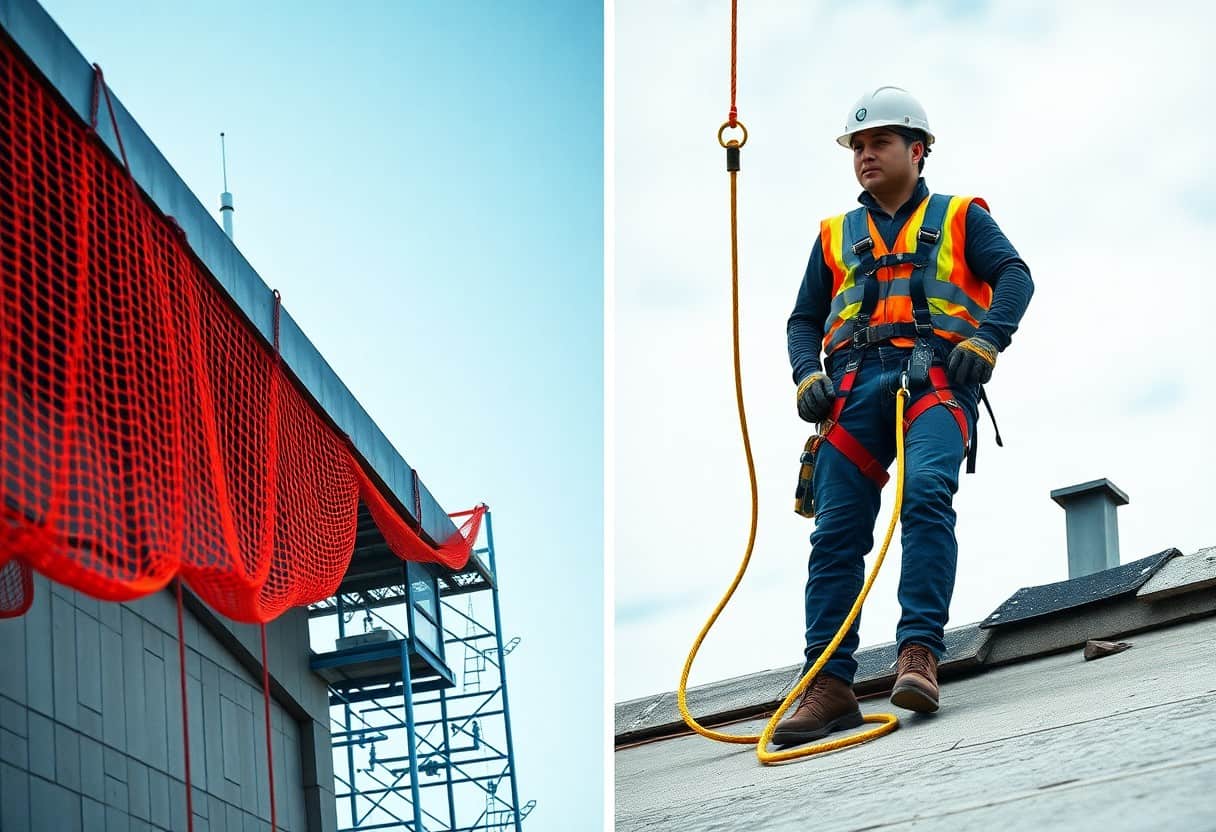
Over the course of this guide, you will learn how safety netting acts to catch a falling person and protect against ground-impact and fatal falls, while fall-arrest systems arrest a fall in mid-air using harnesses and anchors; you must assess your site, the immediate danger of free-fall height, access limitations and maintenance needs to choose the safest option for your workforce.
Understanding Safety Netting
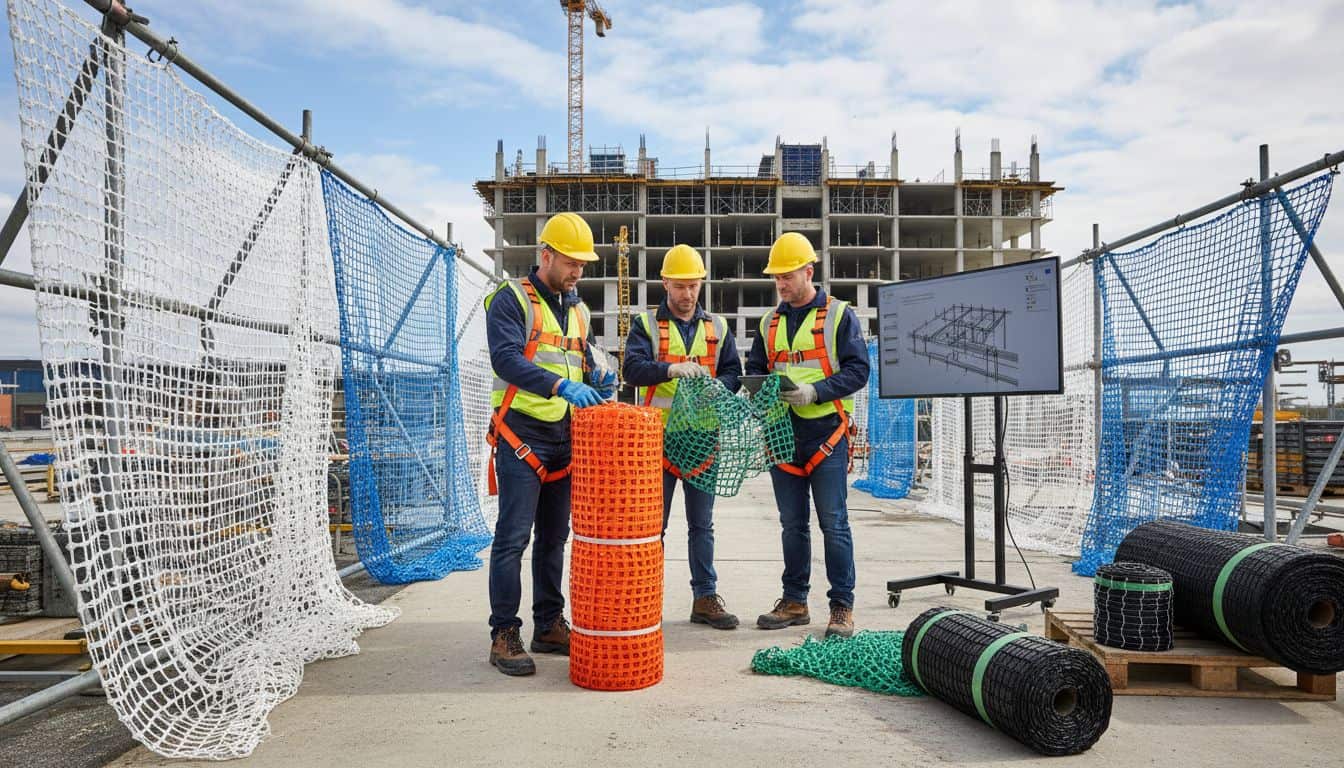
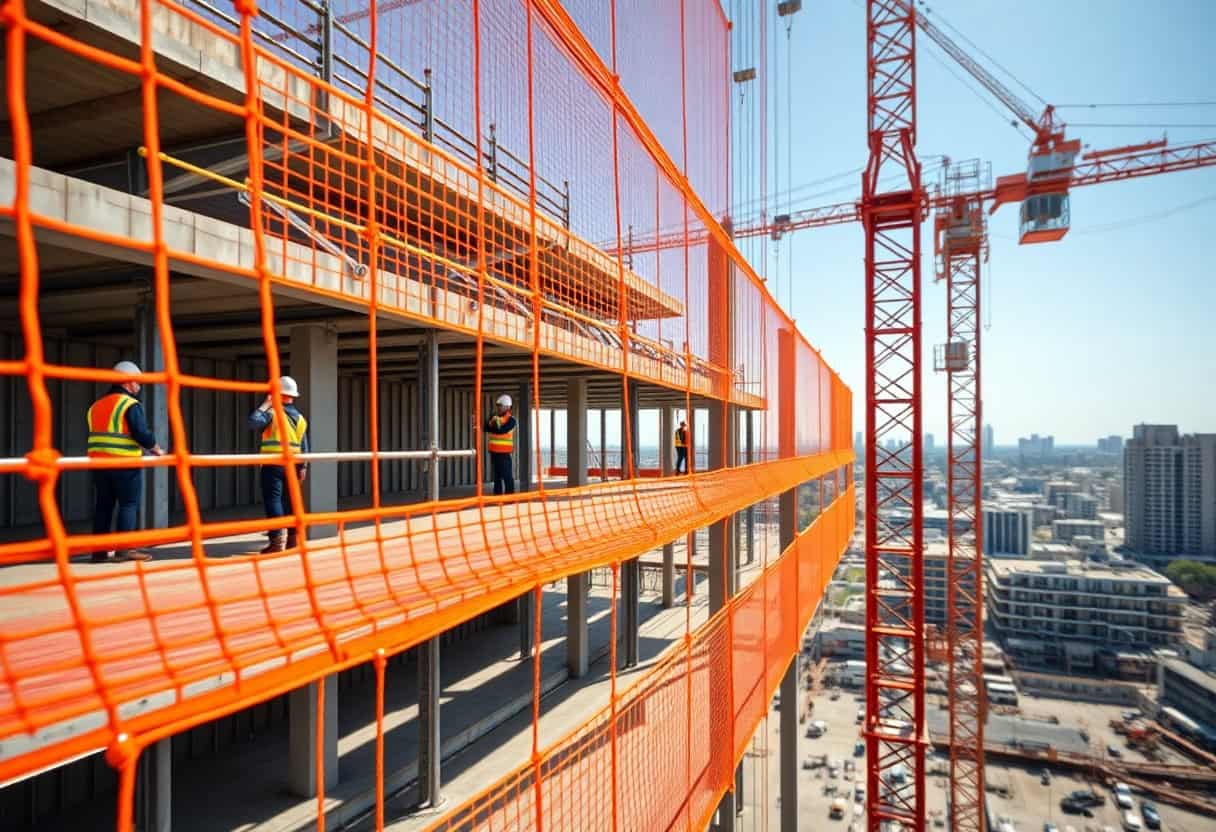
Generally used as a collective protection measure, safety netting catches falls and falling debris beneath working levels, reducing impact energy and secondary injuries. You should note nets are manufactured and tested to EN 1263-1, typically using a drop test with a 100 kg mass, and are often installed 2-4 m below the edge to allow controlled deformation. Installation quality matters: poorly tensioned or incorrectly anchored nets significantly increase risk, while correctly specified nets protect multiple workers simultaneously.
Definition and Purpose
Defined under EN standards as a passive fall-protection system, safety netting is intended to catch persons or materials that fall from edges or scaffolds when collective measures are not achievable. You rely on nets to provide a safety envelope that absorbs energy and prevents ground impact; HSE guidance favours collective systems like nets over individual harnesses where practical. Nets also limit site-wide hazards by containing debris from heights.
Key Components
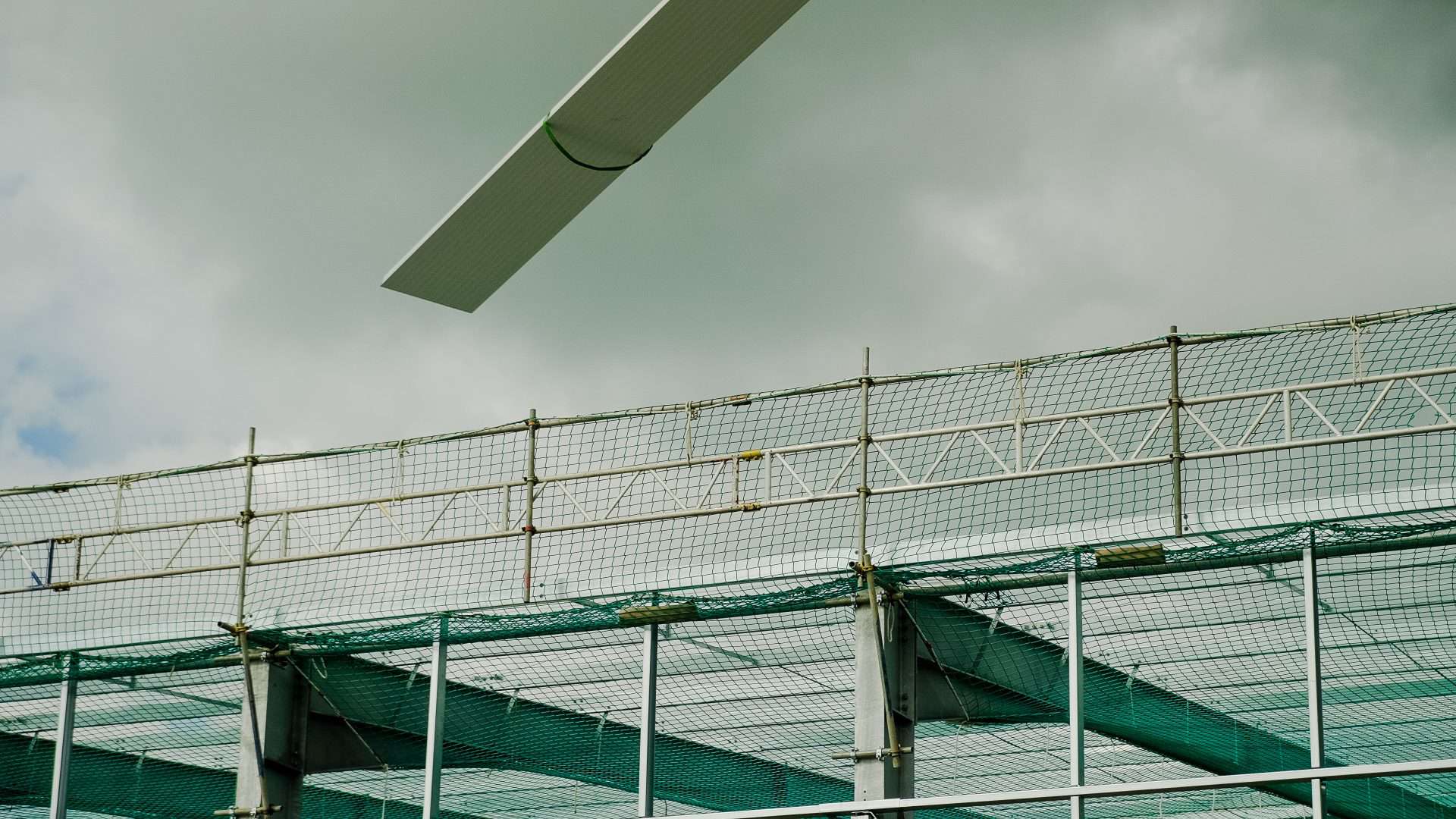
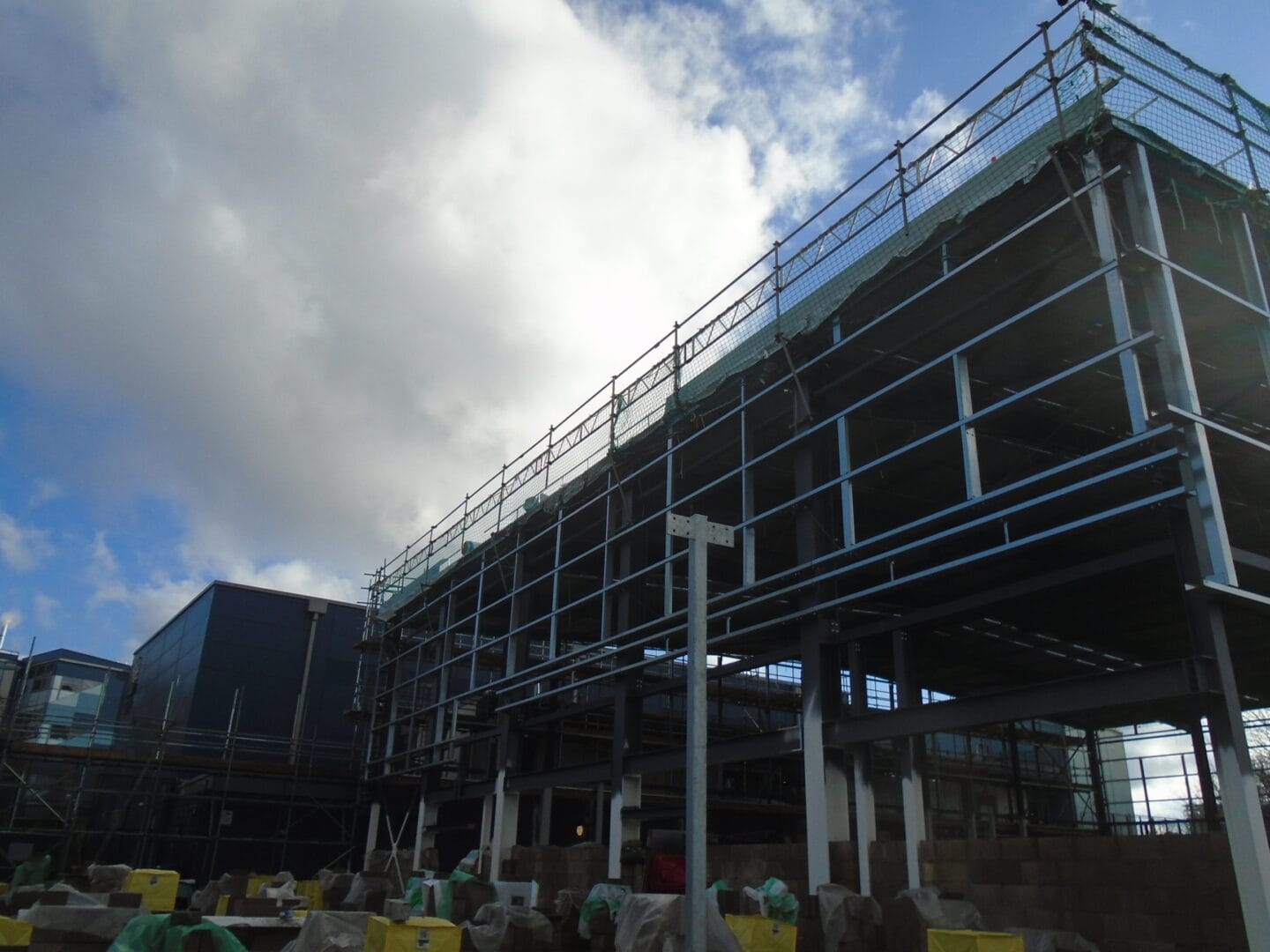
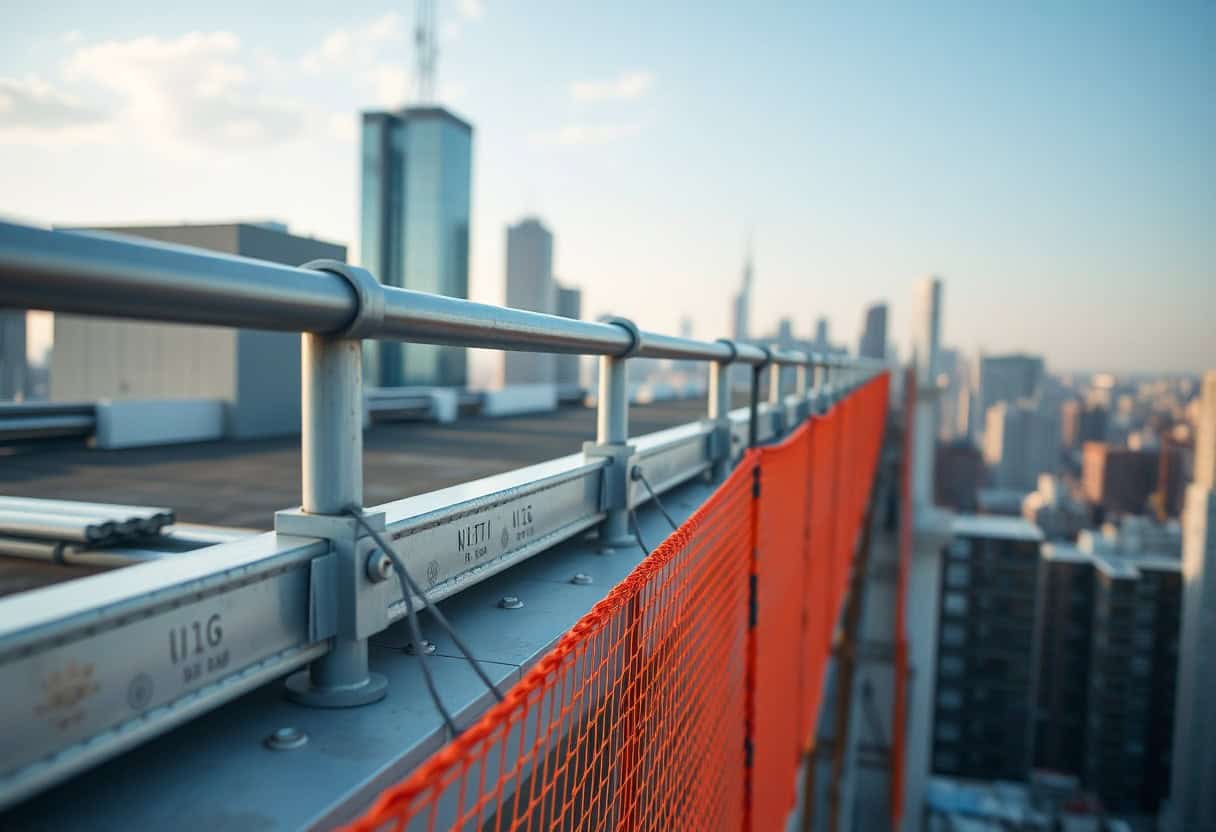
Typical nets comprise a knotted or knotless mesh, a high-strength perimeter rope, connection rings or shackles and a supporting anchor framework (scaffolding, cantilevers or purpose-built posts). You’ll find fixings commonly spaced about 1.5-2 m apart and UV-stable materials for longevity; manufacturers supply load ratings and installation patterns that you must follow. Regular inspection of stitching, ropes and anchors is necessary to maintain rated performance.
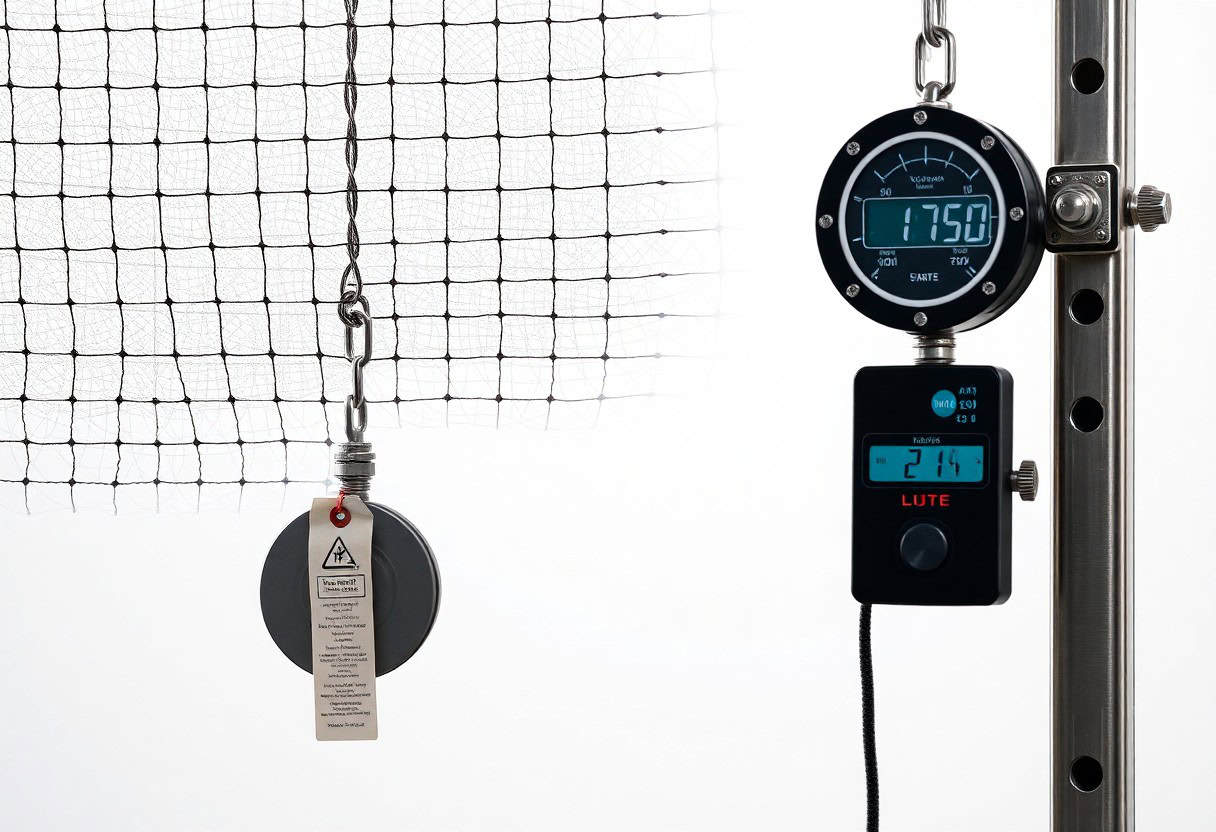
Delving deeper, mesh aperture, strand material (polyamide or polypropylene) and border-rope diameter determine energy-absorption; manufacturers publish maximum allowed sag and drop-height limits. You should verify that every anchor meets the supplier’s load specification and that net panels overlap correctly to avoid gaps. On larger façades, modular nets are joined with certified shackles and tensioned with turnbuckles so the system behaves predictably during a fall test.
Exploring Fall-Arrest Systems
Definition and Purpose
Fall-arrest systems are engineered to stop a fall once it has begun, so you avoid impact with the ground or structures. They rely on a harness-to-anchor connection to dissipate energy; full-body harnesses meet EN 361 and anchors are generally required to withstand 12 kN. While they prevent fatal outcomes, they still subject your body to significant loads-often up to a peak of 6 kN-so immediate rescue planning is part of any competent system.
Key Components
A typical fall-arrest setup for you will include a full-body harness (EN 361), an energy-absorbing lanyard (EN 355) or self-retracting lifeline (EN 360/EN 353‑2), connectors (EN 362) and a certified anchor point (EN 795) rated to at least 12 kN. You must ensure component compatibility, correct sizing, and documented inspections before use.
For example, a 2 m lanyard plus an energy absorber and wearer height can demand a clearance of around 4 m beneath your work level; SRLs typically limit fall distance to under 2 m and reduce peak forces, improving survival odds. Inspection intervals are usually every 6-12 months, and incompatible connectors or inadequate anchors are common causes of system failure, so log serial numbers, inspection dates and any defects to maintain safety.
Comparisons Between Safety Netting and Fall-Arrest Systems
When deciding, you should compare coverage, rescue planning and compliance: safety nets give broad area protection and shield bystanders from falling objects, whereas fall‑arrest systems protect individuals and limit arrest forces. For an in‑depth legal and practical distinction see How Does Fall Protection Differ from Fall Prevention? Standards differ (EN 1263‑1 vs EN 361/EN 355) and that affects your choice.
Comparison at a glance
| Safety Netting | Fall-Arrest Systems |
|---|---|
| Purpose: area‑based protection, catches multiple workers and debris beneath work zones. | Purpose: individual protection, arrests a fall and limits peak forces on the body. |
| Typical use: façades, bridge works, stadium construction; governed by EN 1263‑1 inspections. | Typical use: roof maintenance, confined clearances; harnesses EN 361, energy absorbers EN 355. |
| Benefits: covers large areas, reduces risk to bystanders and tools; minimal user input once installed. | Benefits: portable, allows worker mobility, energy absorbers limit peak arrest force to ≈6 kN. |
| Limitations: fixed location, requires anchorage and clearance beneath, may obstruct works. | Limitations: single‑user focus, needs user training, regular inspection and a defined rescue plan. |
Advantages of Safety Netting
You gain wide‑area protection with nets: one correctly rated net can catch multiple falls and prevent tools from striking the ground, keeping sites operational. They’re efficient on large façades or bridge decks and reduce the need for every operative to be individually tethered, while meeting EN 1263‑1 load and inspection criteria.
Advantages of Fall-Arrest Systems
You retain mobility and control with fall‑arrest: harnesses (EN 361) and energy absorbers (EN 355) allow movement along edges and arrest a fall with peak forces typically limited to about 6 kN, making them suitable where clearance is limited and nets aren’t practicable.
Additionally, you can deploy fall‑arrest systems rapidly for short‑duration tasks; they’re portable and scalable for complex roofs or internal voids. However, they demand planned rescue capability, regular inspections (commonly every 6-12 months) and documented user training to manage suspension risks and ensure the system performs as intended.
Application Scenarios
On large projects you’ll often choose nets for horizontal zones such as bridge decks, stadium seating and long-span scaffolding because they can protect multiple workers and debris at once; safety nets are commonly positioned within 9.14 metres of the work surface to limit fall distance. For single-person tasks at edges or on roofs you’ll opt for personal systems-see Fall Restraint vs. Fall Arrest: What’s the Difference? for a clear comparison.
When to Use Safety Netting
You should specify safety netting when work spans wide areas or when multiple trades operate below the work face, such as façade installation or shipbuilding; nets can catch people and tools, reducing the risk of ground strikes and material damage. Typical deployments include bridge construction, stadium roofs and high scaffolds, and they’re preferred when you need collective protection rather than individual harness systems.
When to Use Fall-Arrest Systems
Choose fall-arrest when you’re working at exposed edges, on pitched roofs or where you must remain mobile-personal systems suit routine maintenance, window cleaning and short-duration tasks. Anchors commonly require a minimum strength of 12 kN, and arrest forces are designed to stay below about 6 kN to reduce injury when the system activates.
You must also plan for rescue and clearance: calculate total fall clearance (free fall plus deceleration and harness stretch), which typically ranges from 3-6 metres depending on lanyard or SRL used, and ensure a rapid retrieval strategy because suspension can incapacitate a suspended worker within 10-20 minutes; confirm anchor ratings, rescue times and clearance before authorising work.
Safety Regulations and Standards
When you plan protection, the UK’s Work at Height Regulations 2005 and CDM 2015 set the legal framework: you must avoid work at height where possible, favour collective measures such as nets, and only use personal fall-arrest where necessary. HSE guidance expects documented risk assessments, competent personnel and a rescue strategy; failure can lead to prosecution, improvement notices or unlimited fines if duty-holders don’t satisfy statutory duties.
Relevant Codes and Guidelines
You should apply recognised standards: BS EN 1263‑1 for safety nets (tested to specified drop criteria), BS EN 361 for full‑body harnesses, BS EN 795 for anchor devices and BS EN 355 for energy absorbers; HSE guidance and manufacturers’ instructions dictate inspection regimes and installation clearances, so always cross‑check the standard with the product datasheet before site use.
Compliance Considerations
Ensure you appoint a competent person to carry out pre‑use checks and formal inspections, maintain written records, and verify system compatibility – for example anchors rated to the required load and nets installed to the manufacturer’s tensioning spec. A rescue plan that mitigates suspension trauma and specifies expected rescue times is imperative; HSE expects prompt recovery capability whenever fall‑arrest equipment is deployed.
For practical compliance, you must keep inspection logs, train workers in donning and emergency rescue, and perform clearance calculations – many sites require between 3-6 m of fall clearance depending on lanyard length and absorber extension. Also ensure systems are re‑inspected after any impact or severe weather and that documentation is available for audits and client reviews.
Case Studies
Drawing on recent site reports, you can see stark contrasts between Safety Netting and Fall-Arrest Systems: nets have intercepted falls with zero penetrations in multiple projects, while harness systems arrested falls with measured peak forces around 5-6 kN; deployment costs ranged from £80 per harness to £3,500 for full net installations, and project downtime varied by up to 27% depending on the system chosen.
- 1) 2018 – 40-storey residential tower (120 m): Safety Netting 2,500 m²; caught 2 workers; 0 injuries; installation £3,200; downtime saved 14 days.
- 2) 2020 – Bridge refurbishment (30 m span): Fall-Arrest Systems for 12 technicians; 1 arrested fall; peak arrest force 5.8 kN; harnesses replaced post‑event; 2-day delay; estimated medical costs avoided £9,400.
- 3) 2019 – Warehouse roof (8 m): Safety Netting 600 m²; prevented 3 edge falls during gale-force winds; nets EN 1263 rated; property damage reduction ~£22,000.
- 4) 2021 – Chemical plant access (15 m): self‑retracting lifelines for 20 operatives; Fall-Arrest Systems recorded max deceleration 4.7 m/s² in tests; compliance audit passed; PPE cost £3,000.
- 5) 2017 – Cathedral spire conservation (45 m): combined Safety Netting and Fall-Arrest Systems; net prevented falling masonry; harness arrested scaffold collapse, 1 worker saved; insurance claim avoided ~£120,000.
- 6) 2022 – Scaffold erection (10 m): incorrectly anchored Safety Netting led to 1 partial penetration; 2 minor injuries; retraining for 45 operatives reduced incidents by 60% year‑on‑year.
Successful Use of Safety Netting
When you install Safety Netting to the manufacturer’s specifications and EN standards, nets have repeatedly absorbed impacts and prevented ground contact – for example, a 2,500 m² installation caught two falls with no penetration and limited secondary damage; you gain broad area protection and reduced material damage, though you must factor anchor integrity and edge overlap into planning.
Successful Use of Fall-Arrest Systems
Deploying Fall-Arrest Systems correctly lets you stop a person mid‑fall and limit peak load to the system design (typically 5-6 kN); one bridge job saw a harness arrest one fall, the kit was withdrawn and replaced afterwards, and the operative required no hospitalisation, demonstrating effective personal protection when rescue is prompt.
You should plan for post‑arrest actions: assemble a rescue team before work begins, inspect and replace any harness or lanyard exposed to impact, and check for secondary hazards such as suspension trauma and swing‑fall; failure to act immediately significantly raises the risk even after a successful arrest.
Final Words
As a reminder, when weighing safety netting against fall-arrest systems you must assess the likely fall scenario, work access and rescue capability: nets provide collective protection by preventing descent, while fall-arrest systems protect the individual by stopping an already occurring fall. You should choose based on risk assessment, regulatory compliance, inspection regimes and training to ensure your control is effective and sustainable.
FAQ
Q: What are the main functional differences between safety netting and fall-arrest systems?
A: Safety netting is a collective, passive measure installed beneath work areas to catch people or falling objects and to protect multiple workers and the public below. It limits fall distance by intercepting the fall and dispersing impact energy across the net. Fall-arrest systems are personal protective systems (harness, lanyard, connectors and anchor or guided systems) that arrest an individual’s fall before or during impact by absorbing energy and stopping further descent. Nets provide area protection and object containment; fall-arrest provides individual protection and allows greater freedom of movement but only protects the wearer.
Q: Which regulations, standards and training apply to each system in the UK?
A: Work at Height Regulations 2005 require hierarchy of control favouring collective measures (such as safety netting) over personal protective equipment. Safety nets should comply with relevant standards (EN 1263 series) and be installed, inspected and maintained by competent persons. Fall-arrest components should meet applicable EN standards (for example EN 361 for full-body harnesses; EN 354/355 for lanyards and energy absorbers; EN 362 for connectors; EN 795 for anchor devices; EN 363 for systems). Users of fall-arrest equipment must be trained in correct donning, use, pre-use checks and emergency rescue procedures. Both systems require documented inspection regimes: pre-use checks by users, periodic inspections by competent persons, and an agreed rescue plan before work starts.
Q: How should I choose between safety netting and fall-arrest systems, and what limitations should I be aware of?
A: Selection depends on task, number of workers, site constraints and risk assessment. Use safety netting when work exposes multiple people or the public to falling hazards, when clearance below is available and when dropped-object containment is needed. Use fall-arrest where mobility is required, where nets cannot be installed due to access or obstructions, or for work at isolated positions. Consider: required free-fall clearance and potential for ground or structure contact; net lay‑out, edge protection and anchorage; need for rescue after suspension to avoid suspension trauma; maintenance, inspection frequency and lifecycle costs; potential for secondary impacts within a net or between structure and user. Combining systems is common (netting plus harness for added protection). Ensure competent installation, documented inspections and a tested rescue plan irrespective of choice.