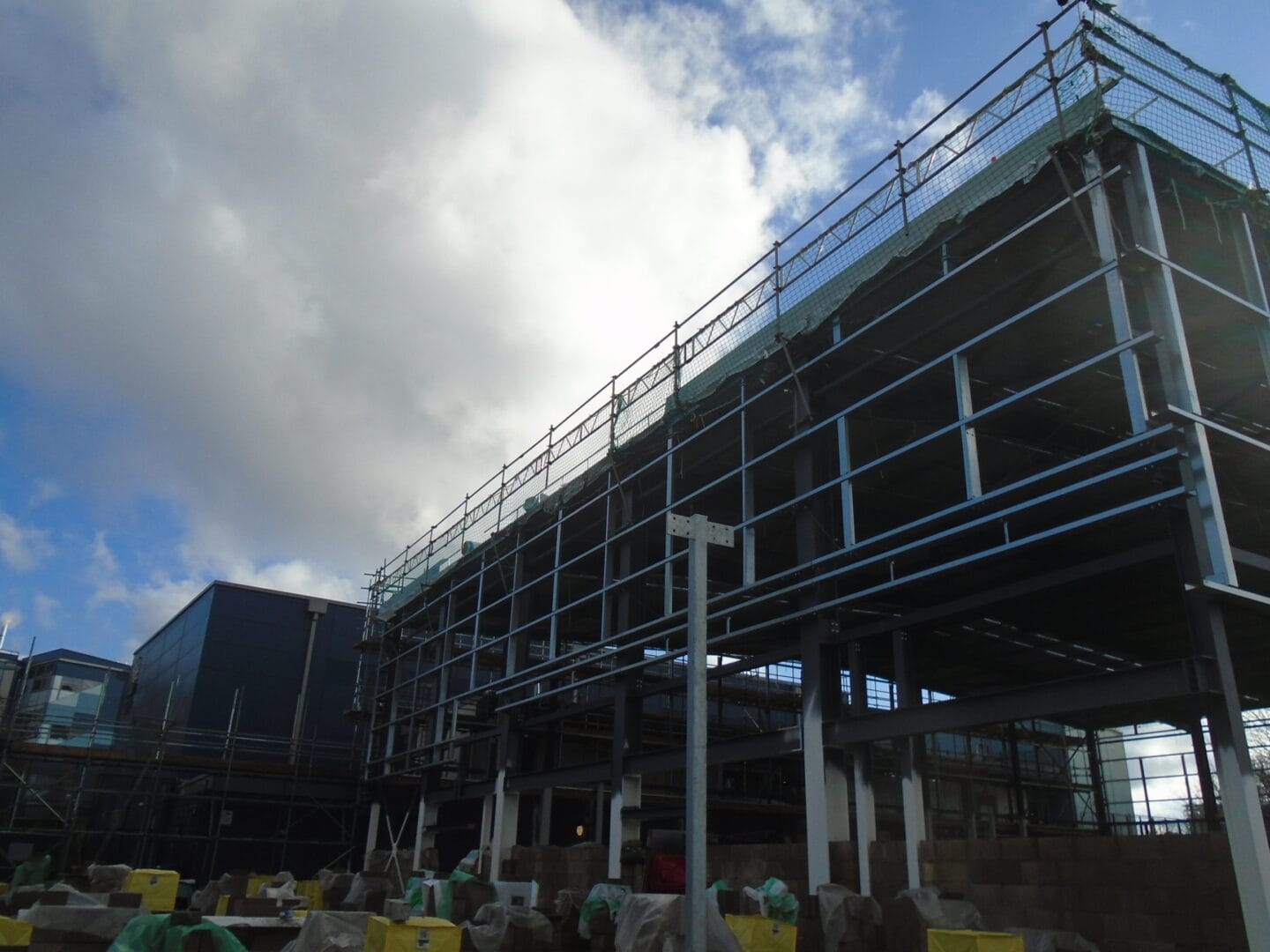
When you’re appointing a safety netting contractor, you’ll often hear references to BS EN 1263-1-2 — the British and European standard that governs the design, performance, and installation of safety nets used for fall protection. Understanding what this standard actually requires, and why it matters to you as a principal contractor or site manager, is more useful than a technical deep-dive into fibre specifications and laboratory test protocols.
At Red Safety Netting, every installation we carry out is compliant with BS EN 1263-1-2. Here’s what that means in practice.
What BS EN 1263-1-2 Covers
BS EN 1263-1-2 sets out the performance requirements for safety nets used to protect workers from falls on construction and maintenance sites. It covers the design and classification of net systems, the energy absorption performance required to arrest a fall safely, mesh specifications, anchorage requirements, and the marking and traceability requirements that allow a net’s certification to be verified.
The standard exists because not all safety netting is equal. A net that looks adequate may not perform adequately when it’s needed. BS EN 1263-1-2 provides an objective, tested framework for what a compliant safety net system must be able to do — and it gives principal contractors and site managers a clear basis for specifying and verifying the systems installed on their sites.
Net Classification and What It Means for Your Project
Under BS EN 1263-1-2, safety nets are classified by their energy absorption capacity — essentially, their ability to arrest a fall of a given weight from a given height without failing. Selecting the right net classification for a specific application isn’t a decision that should be made arbitrarily. It depends on the height from which a fall could occur, the weight of the person being protected, and the clearance available beneath the net.
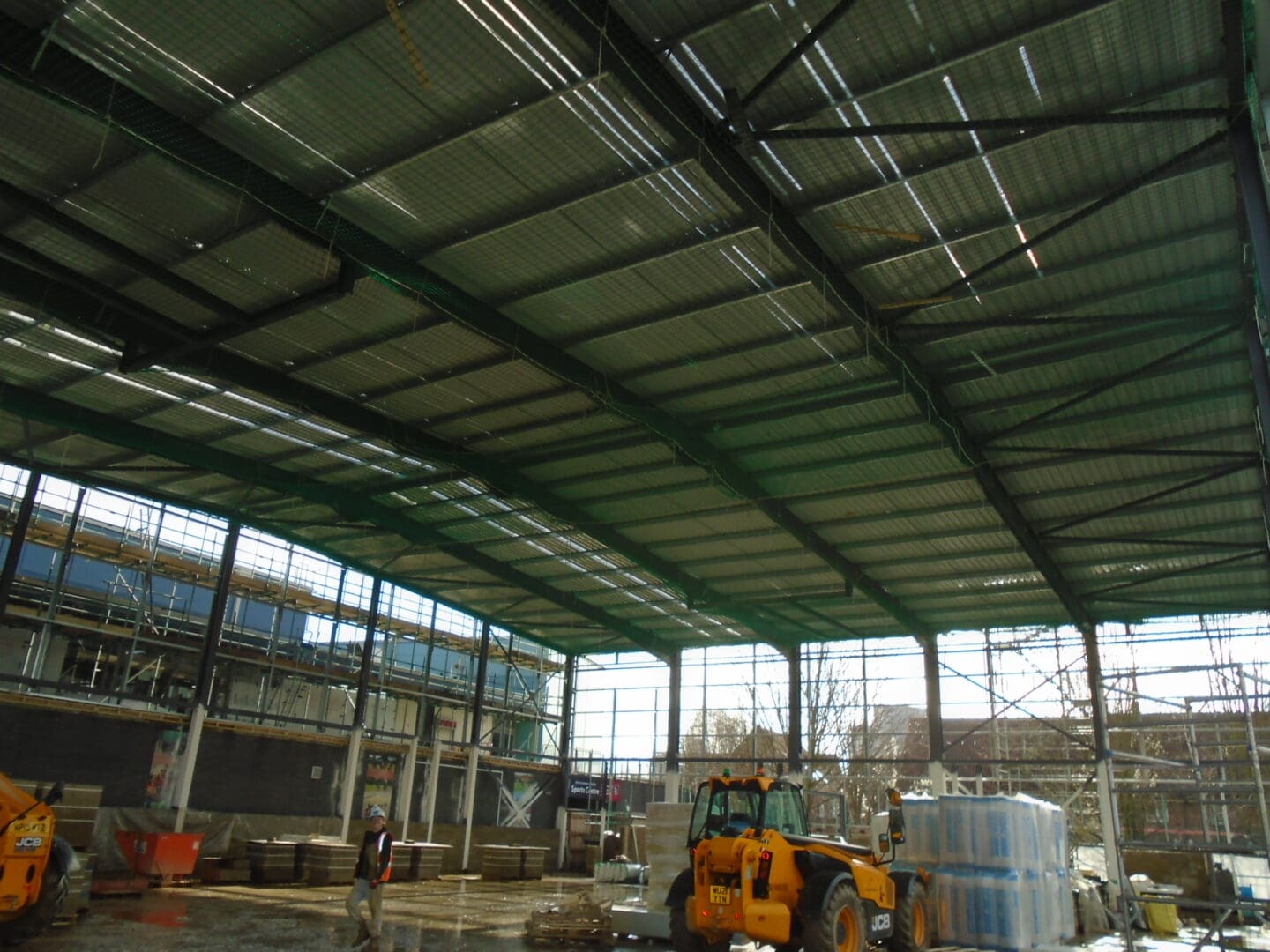
Red Safety Netting selects net systems appropriate to the specific application on each project. We don’t apply a one-size-fits-all approach — the system installed in a roof structure on a new build development is specified for the conditions on that site, not simply whatever happens to be on the van.
Anchorage — Where Compliance Most Often Falls Short
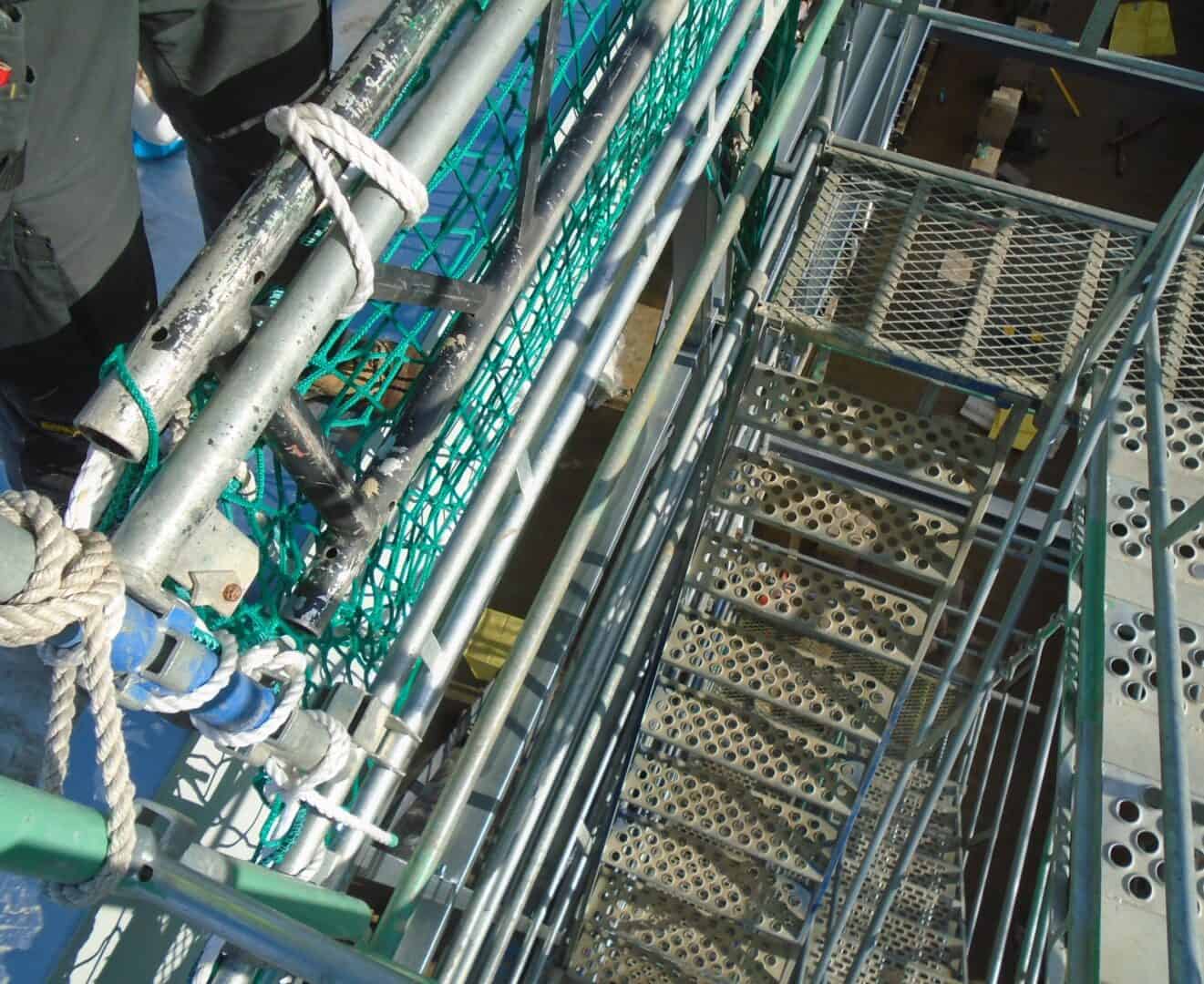
The net itself is only part of the system. A correctly specified and tested net installed on inadequate anchorages won’t perform to its rated capacity — the anchorages will fail before the net does its job. BS EN 1263-1-2 sets requirements for anchorage strength and integrity that are just as important as the net specification itself.
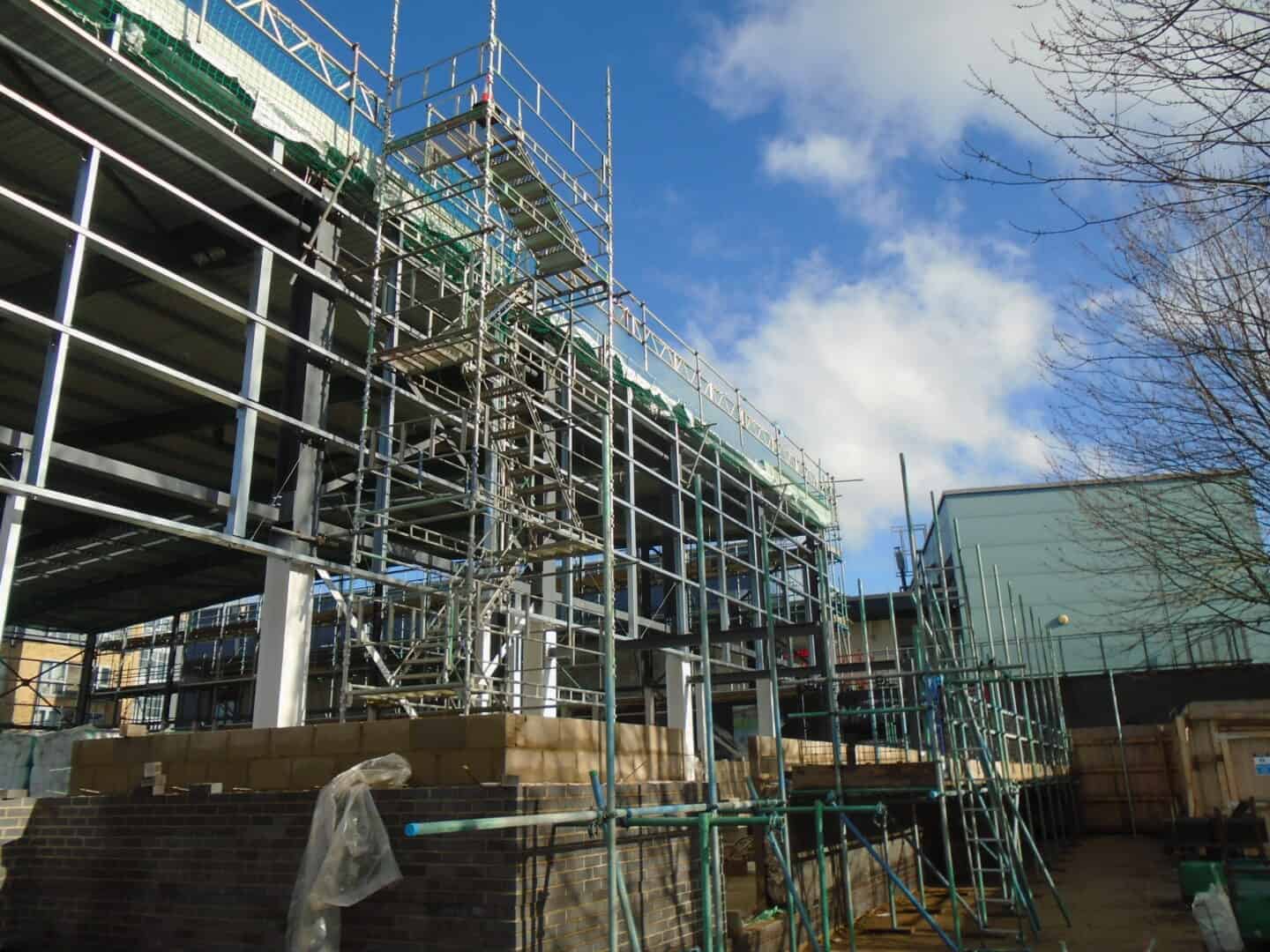
Every anchorage point used in a Red Safety Netting installation is selected and verified for the specific structure it’s attached to. On new build timber frame structures, steel frame buildings, and masonry — all of which have different fixing characteristics — the anchorage solution is appropriate for the substrate and verified before the net is tensioned. This is one of the areas where the difference between a FASET-accredited installer and an unaccredited one is most significant — and most consequential.
Clearance — Getting the Geometry Right
One of the most critical and least visible aspects of safety netting installation is clearance. A safety net arrests a fall through controlled deformation — the net sags under the energy of the fall, absorbing that energy progressively. For this to work safely, there needs to be sufficient clear space beneath the net to allow that deformation without the person in the net contacting the structure or ground below.
Calculating the required clearance involves the fall height, the net’s deflection characteristics under load, and the geometry of the space below. Get it wrong and a net that performs exactly to specification can still result in a serious injury because there wasn’t enough space for it to do its job. Red Safety Netting calculates clearance requirements for every installation, and won’t install a system where adequate clearance cannot be achieved.
Traceability and Documentation
BS EN 1263-1-2 requires that safety nets are marked to allow their specification and certification to be traced. Every net Red Safety Netting installs carries the appropriate marking, and we retain documentation that confirms the net’s classification, testing certification, and installation details for every project. This gives the principal contractor a clear audit trail — evidence that the fall protection system on their site was specified correctly, installed by competent operatives, and compliant with the recognised standard.
In the event of an HSE inspection or a post-incident investigation, that documentation is the difference between being able to demonstrate compliance and not being able to.
If you’d like to discuss safety netting specification and compliance for your next project, or request our installation and certification documentation, contact the Red Safety Netting team today.