Why Debris Netting Requirements Differ on Urban and Public-Facing Sites

Looking to protect your workforce on site? Contact us today.

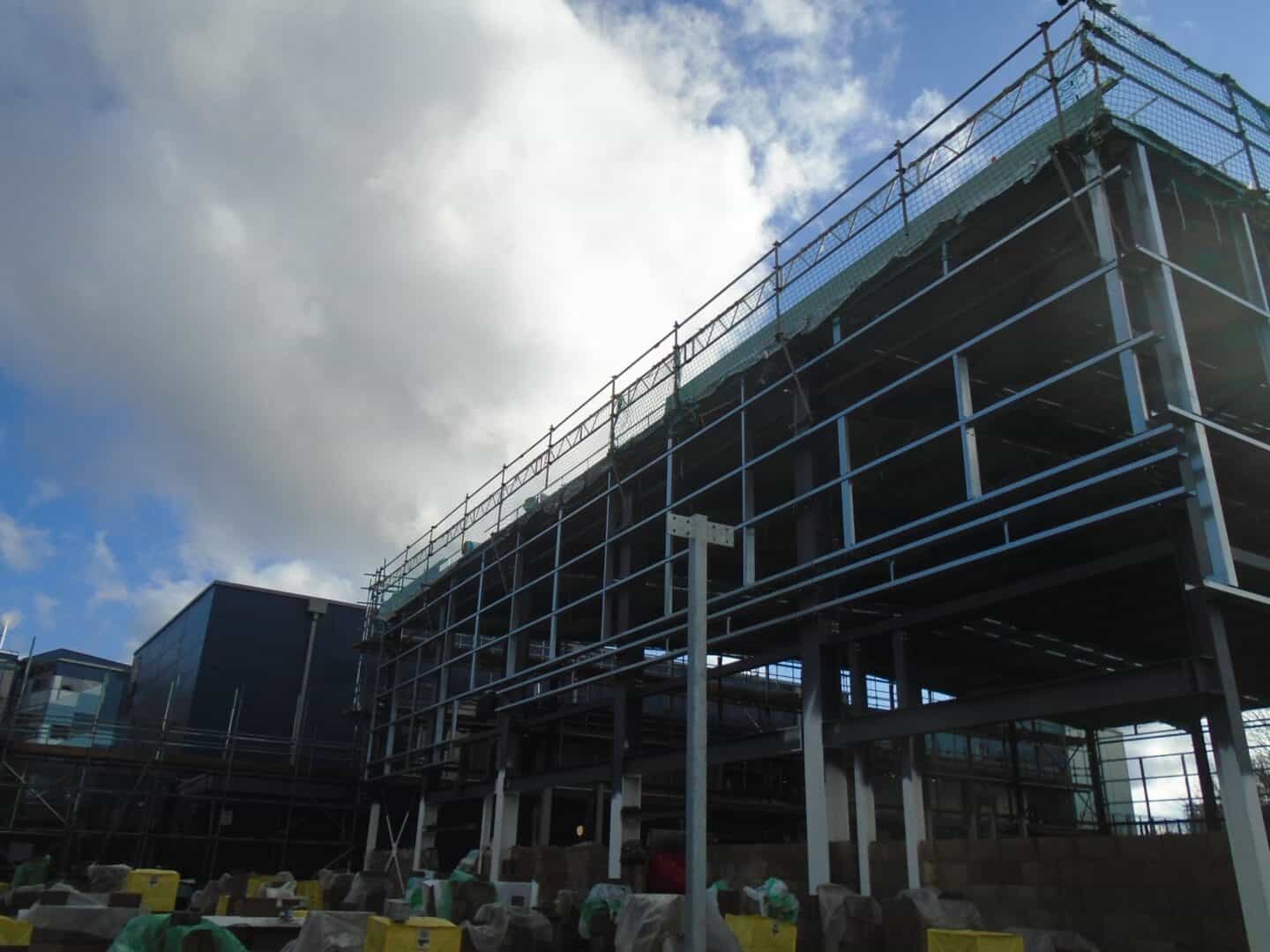
Debris netting requirements are heavily influenced by the relationship between the construction site and the public spaces around it. A site in open countryside with no public access nearby has a different debris exposure profile to a site in a city centre with pedestrians passing within metres of the working zone. The same scaffold geometry, the same materials, the same trades, but very different debris netting specifications.

The driver is the principal contractor’s duty under CDM 2015 and under the Health and Safety at Work Act to protect persons not at work who might be affected by the construction activity. On a remote site, the people not at work who could be affected are few and far between. On an urban site, they are present continuously and in significant numbers. The required protective measures scale accordingly.

For urban and public-facing sites, this typically translates into more comprehensive debris netting around the working zones, finer mesh sizes to retain smaller dropped objects, and more frequent inspection cycles to verify the netting remains in serviceable condition. It also typically translates into containment netting at lower levels of the building, where in a remote setting catch netting at higher levels might suffice.

There is also a regulatory dimension specific to certain urban locations. Some local authorities have street works permits that include specific requirements for debris and material containment over public spaces. Some have agreements with adjoining property owners that include containment standards. Where the development sits within these specific arrangements, the debris netting specification is not solely a CDM question but also a legal compliance question.

Red Safety Netting’s experience on urban sites in London, Cambridge and the South East includes detailed knowledge of which local authorities have specific street works requirements affecting debris netting, what those requirements are in practice, and how to specify and install debris netting that satisfies both the CDM duty and the local authority arrangement.

For developers and principal contractors planning an urban housing or commercial development, the debris netting specification should be confirmed at pre-construction stage rather than mobilised reactively. The cost of doing it well is small. The cost of getting it wrong, in terms of stoppages from local authority complaints or compensation to neighbouring properties for material damage, is significantly larger.

Mesh size selection is particularly important for urban sites. The standard debris netting mesh that performs well against larger dropped objects can let smaller items through. Where the site is overlooking public pavements or vehicle parking, smaller dropped objects, including bolts, fixings or tools, can cause significant injury or property damage. The mesh specification should be chosen against the smallest object that needs to be retained, not the most common.

Fixing density and structural support are equally important. Debris netting carries wind load as well as material drop load. On exposed urban sites with high adjoining buildings, the wind effects can be amplified by the surrounding geometry. Standard fixing densities calculated for open exposure can be inadequate. The netting specification should be calculated against the actual site exposure, not against a generic assumption.

Replacement and condition management is the operational follow-through. Debris netting on urban sites degrades faster than on remote sites because it is exposed to more dust, more pollution, and more incidental contact with adjacent surfaces. Replacement cycles need to reflect the actual wear pattern. Where the netting is left in place beyond its service life, the protective performance falls and the principal contractor’s duty position weakens.

Red Safety Netting’s urban site protocols include condition assessment at every inspection cycle. Netting showing signs of UV degradation, contamination or mechanical damage is replaced as part of the planned maintenance rather than left until failure. The cost of proactive replacement is small relative to the cost of a netting failure on a public-facing site.

Talk to Red Safety Netting To discuss debris netting on your urban or public-facing site on your scheme, contact Red Safety Netting on 01223 890727 or email enquiries@theglobegroup.co.uk.

Looking to protect your workforce on site? Contact us today.

Safety Netting Installation

Safety Netting Installation

Correctly installed safety netting is what stands between a workforce and a fall. Red Safety Netting provides FASET-accredited safety netting installation to BS EN 1263-1 — supplied, rigged, inspected and handed over by qualified Safety Net Riggers for principal contractors and roofing trades nationwide. A safety net is only as good as its installation A…

Safety Netting Hire

Safety Netting Hire

For many projects, hiring safety netting is the most cost-effective way to provide collective fall protection — you get fully compliant, FASET-accredited fall arrest netting installed and inspected for the duration of the work, without the capital outlay of buying a system outright. Red Safety Netting offers short and long-term safety netting hire to BS…

Debris Netting Systems

Debris Netting Systems

Debris netting is a fine-mesh containment system that stops small materials — dust, fragments, offcuts, screws and nails — escaping the working area and reaching the public or operatives below. It is the system of choice for urban and public-facing scaffold and facade works. Red Safety Netting supplies and installs debris netting nationwide for principal…

Vertical Protection Nets

Vertical Protection Nets

Vertical protection nets are installed in a vertical plane around a scaffold or building perimeter to contain falling materials, tools and fragments — protecting the public, neighbouring properties and operatives below during facade, cladding and glazing works. Red Safety Netting supplies and installs vertical protection netting nationwide for principal contractors and main contractors. What vertical…

Scaffolding

Scaffolding

Scaffolding gives a safe, stable working platform and access for almost any work at height. Red Safety Netting delivers scaffolding in close partnership with our sister company Globe Scaffolding — combining their scaffolding expertise with our fall protection specialism so the whole working-at-height package can come from one group, properly coordinated. Scaffolding, backed by a…

Safety Decking

Safety Decking

Safety decking provides a stable, fully boarded working platform with built-in fall protection — a continuous safe surface to work from, and a barrier that limits the fall distance for anyone working above it. Red Safety Netting supplies and installs modular safety decking nationwide for principal contractors and main contractors. What safety decking does Safety…

Man-Safe Safety Netting

Man-Safe Safety Netting

Man-safe safety netting is the most effective collective fall protection for people working at height. Installed horizontally beneath the work area, a fall arrest net catches anyone who falls — protecting the whole workforce at once, without relying on each operative to clip on. As a FASET-accredited specialist, Red Safety Netting supplies, rigs and inspects…

Perimeter edge guardrail protection

Perimeter edge guardrail protection

Perimeter edge protection is the collective barrier that stops people and materials going over an exposed edge — a physical guardrail at roof level, on slab edges and around openings. As the first line of defence in the hierarchy of fall protection, it prevents falls rather than arresting them. Red Safety Netting supplies and installs…

safety nettingHaki stair access towers

Haki stair access towers

Haki stair access towers provide a wide, comfortable staircase up a structure — the safest and most efficient way to move people and materials between levels on a busy site. Where a ladder tower gives access, a stair tower gives flow. Red Safety Netting supplies and installs Haki stair access towers nationwide for principal contractors…

Ladder access towers

Ladder access towers

Ladder access towers provide safe, compliant vertical access to height — a stable, purpose-built tower for getting operatives and equipment up and down a structure without relying on leaning ladders. Red Safety Netting supplies and installs ladder access towers nationwide for principal contractors and main contractors. Safe vertical access to height A ladder access tower…

Looking to protect your workforce on site? Contact us today.

Complete the form and one of the team will be in contact.
Privacy Overview

This website uses cookies so that we can provide you with the best user experience possible. Cookie information is stored in your browser and performs functions such as recognising you when you return to our website and helping our team to understand which sections of the website you find most interesting and useful.