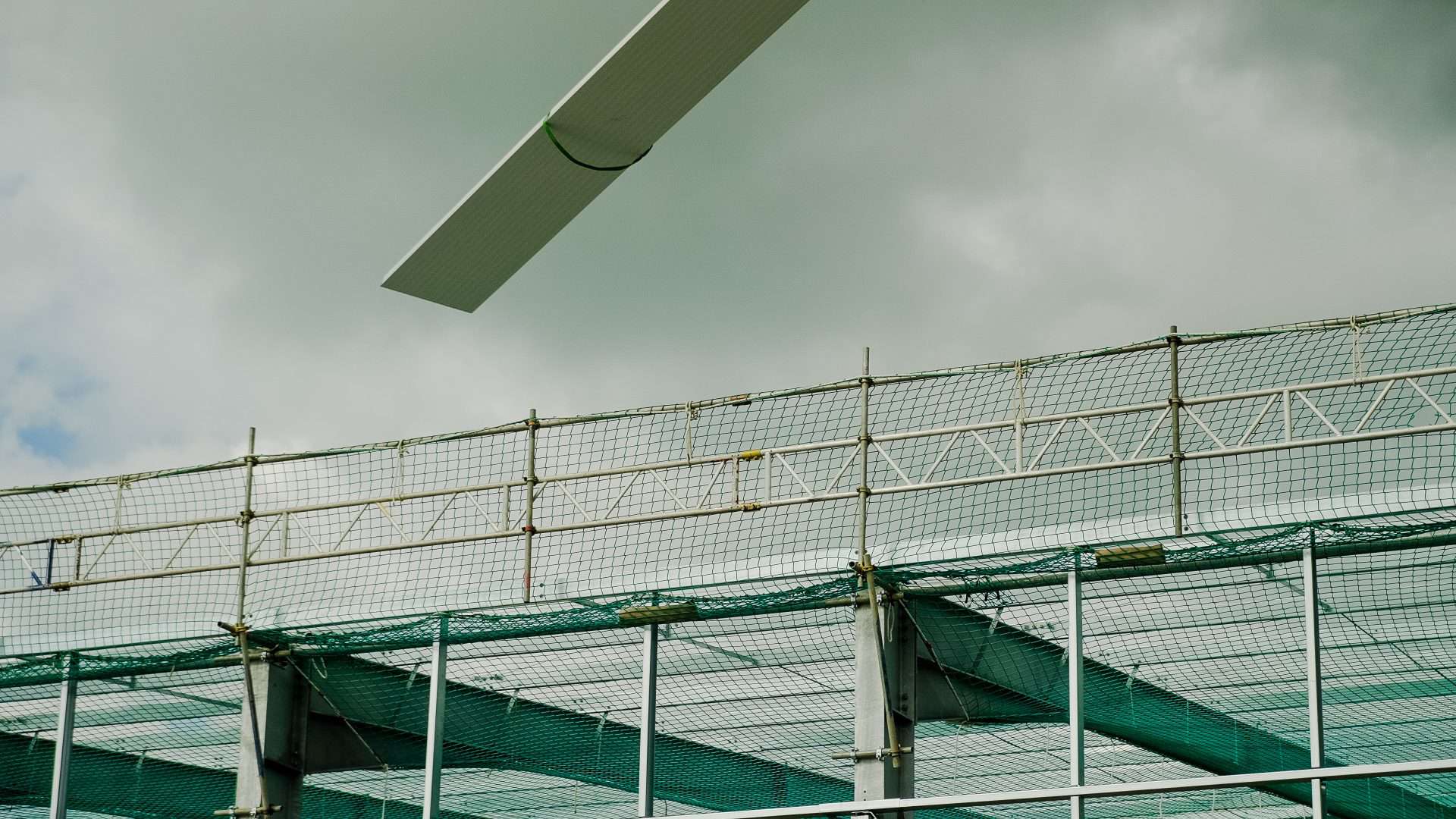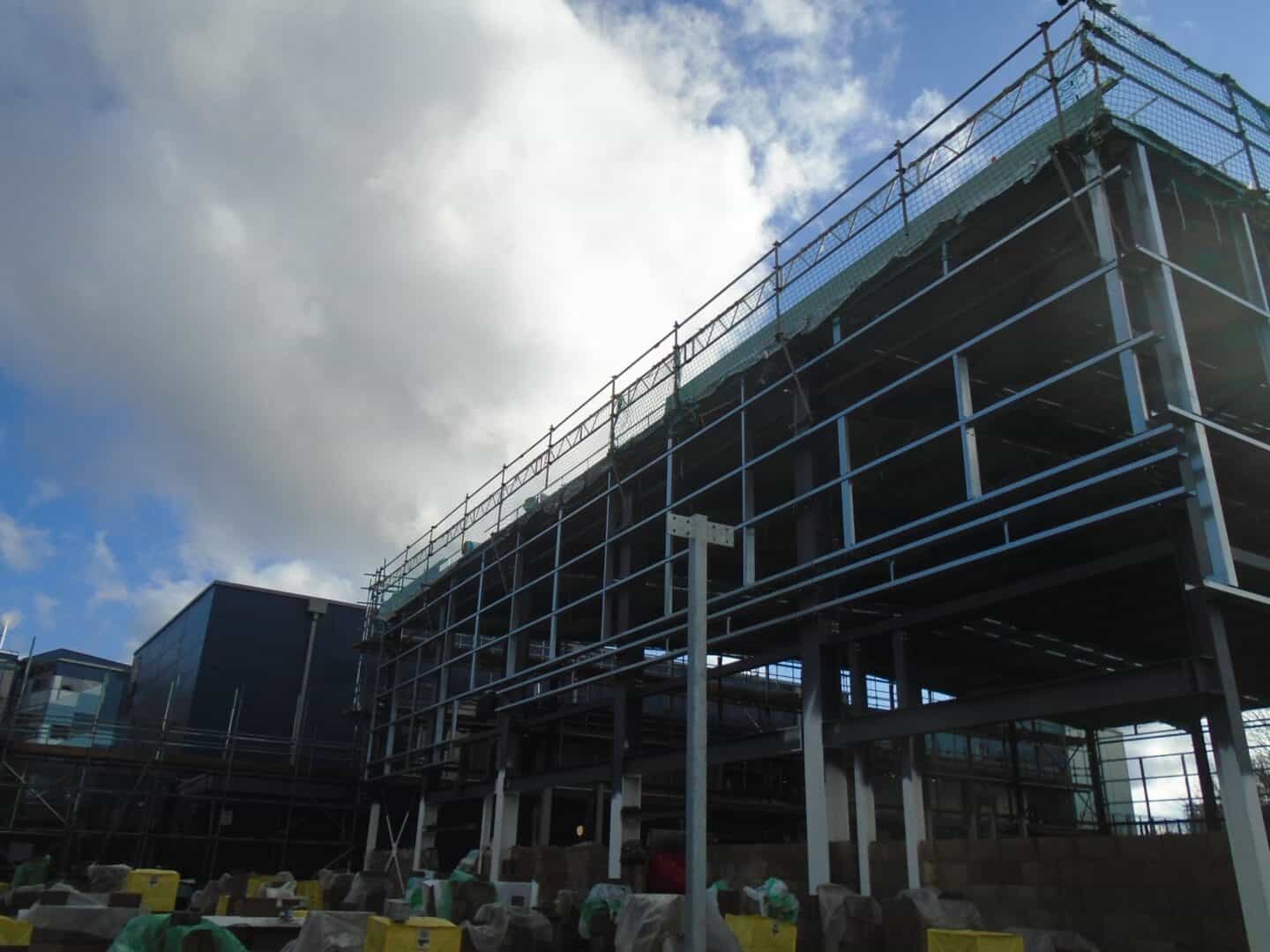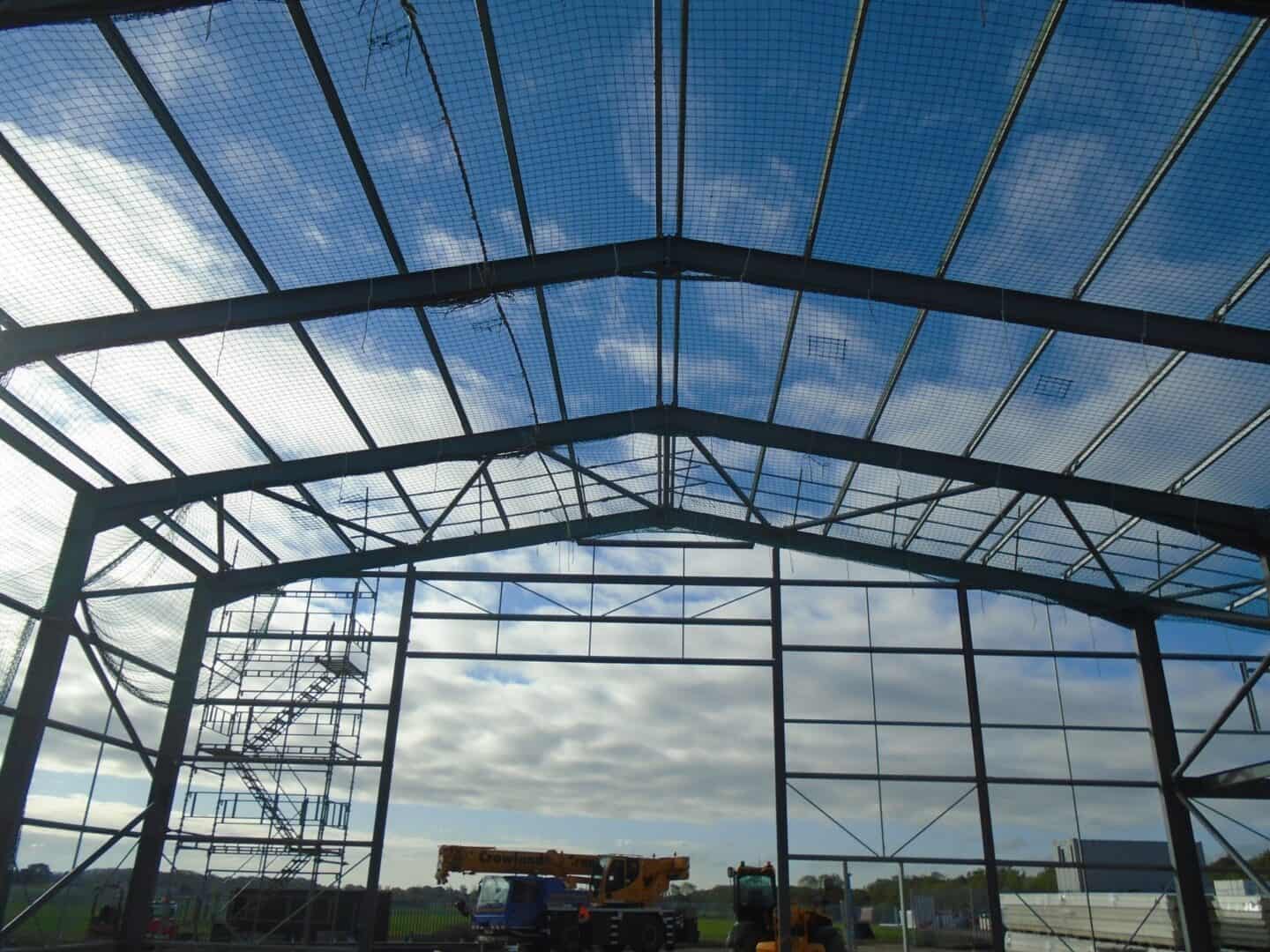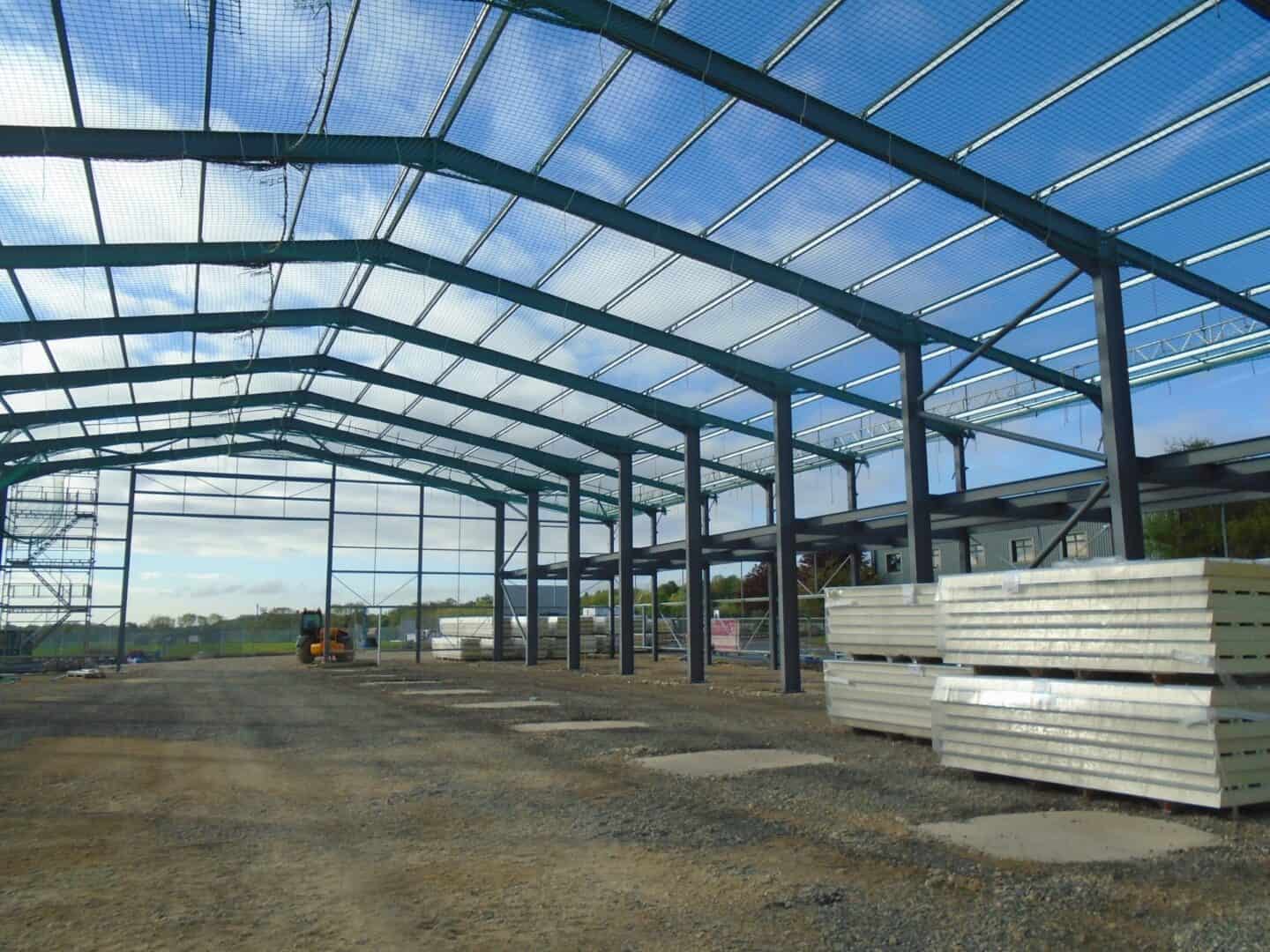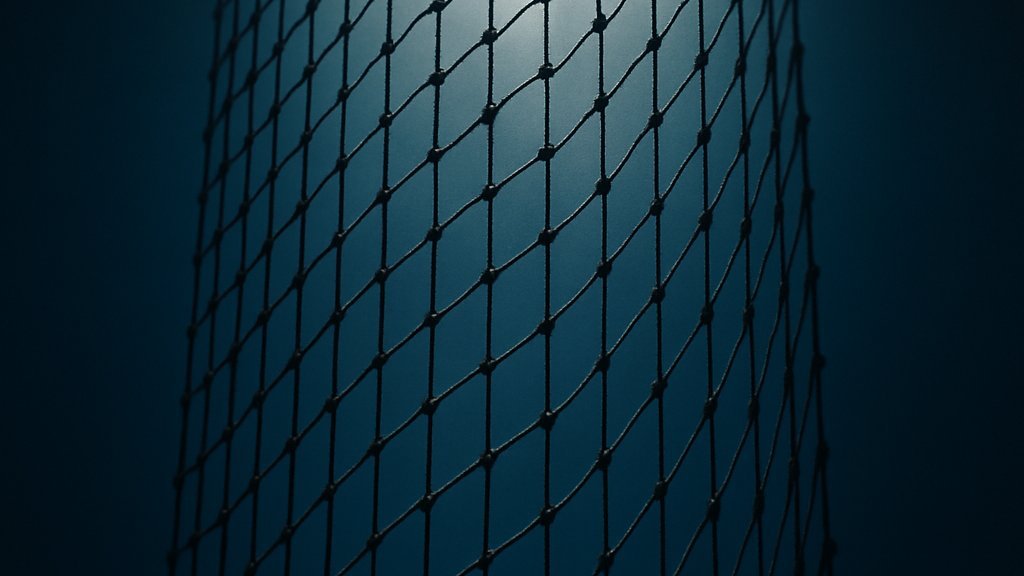
Vertical safety netting addresses a specific category of fall and falling-object risk that horizontal catch netting does not cover. Where catch netting is installed beneath an operative to arrest a fall from height, vertical netting is fixed across an opening, a perimeter or a face to prevent objects, debris or operatives from leaving the working area in the horizontal plane. The two systems are not interchangeable. Each covers a different mode of risk.
Vertical netting is most commonly required in three situations. The first is on the perimeter of multi-storey scaffold or building edges where dropped tools or materials would otherwise fall outside the site boundary onto a road, a pedestrian route or a neighbouring property. The second is across openings in the building envelope, particularly during the construction of stairwells, atria, or lift shafts where the operatives working in the area need protection against falls but a horizontal catch arrangement is not feasible. The third is for environmental and weather control, where the netting also functions as containment for blown debris during high winds.
The specification choice depends on which of these functions the netting is required to perform. Debris netting for perimeter use focuses on light weight, breathability and rapid installation. Anti-fall netting across openings is heavier, tested to BS EN 1263-1, and requires more substantial fixing arrangements. Containment netting for environmental purposes can use lighter mesh but typically requires more comprehensive coverage. Specifying one type where another is required produces protection that is either inadequate or unnecessarily expensive.
Mesh size is the most common detail that gets specified loosely. For debris containment, mesh size is set against the smallest object that needs to be retained, which on most sites is determined by tool drops and small material drops. Mesh too large lets these pass. Mesh too small carries higher wind load and may require additional fixing. For anti-fall use, the mesh and the perimeter rope must meet BS EN 1263-1 classifications, with the right combination of energy absorption and tensile strength for the catch height and load.
Fixing arrangements are where vertical netting most often fails in service. A net fixed too loosely against a scaffold sags into the working zone and reduces effective width. A net fixed too tightly transfers wind load directly into the scaffold ties and can fail in the wrong place. A net fixed at intervals that are too wide allows objects to pass between fixings. Red Safety Netting specifies fixing patterns at design stage against the wind exposure of the site, the scaffold geometry and the intended use of the net.
The interface with public-facing risk is another consideration. On sites bordering live roads, pedestrian routes or third-party premises, the vertical netting is part of the principal contractor’s duty to control risk to non-workers. The CDM 2015 duty here is explicit. Where the netting fails to retain a falling object that then injures a third party, the consequences for the principal contractor and the developer are significant. The specification therefore has to address third-party risk rather than just worker risk.
Maintenance over the life of the net is the area most often forgotten. Nets degrade in service from UV exposure, abrasion against the structure and accumulated debris. A net fitted in March and still in place in September is not in the same condition as it was at installation. The inspection regime should include condition assessment, not just presence assessment. Red Safety Netting includes condition reporting in routine inspection records on the schemes the business covers.
Removal at the end of use is the final specification consideration. Vertical nets are sometimes removed without proper sequencing relative to other site activities, producing residual risk during the dismantling phase. Where the removal is planned and supervised in the same way as the installation, the closing phase of the work is uneventful. Where it is not, accidents during dismantling are not uncommon.
For developers and principal contractors, the practical implication is that vertical netting needs to be specified as carefully as any other engineered fall protection. The choice of mesh, the fixing arrangement, the inspection cycle and the removal plan all need to be addressed at design stage. Sourcing vertical netting on a generic-bag-of-net basis is not the right approach for a scheme where the netting carries actual duty.
Red Safety Netting’s vertical netting service is designed around proper specification. Each install begins with an assessment of the use case, the wind exposure, the structure characteristics and the duration of use. The specification is documented before install and the inspection regime is built into the package. The result is netting that performs as the duty requires rather than netting that visually meets a specification.
Talk to Red Safety Netting To discuss vertical safety netting specification on your scheme on your scheme, contact Red Safety Netting on 01223 890727 or email enquiries@theglobegroup.co.uk.