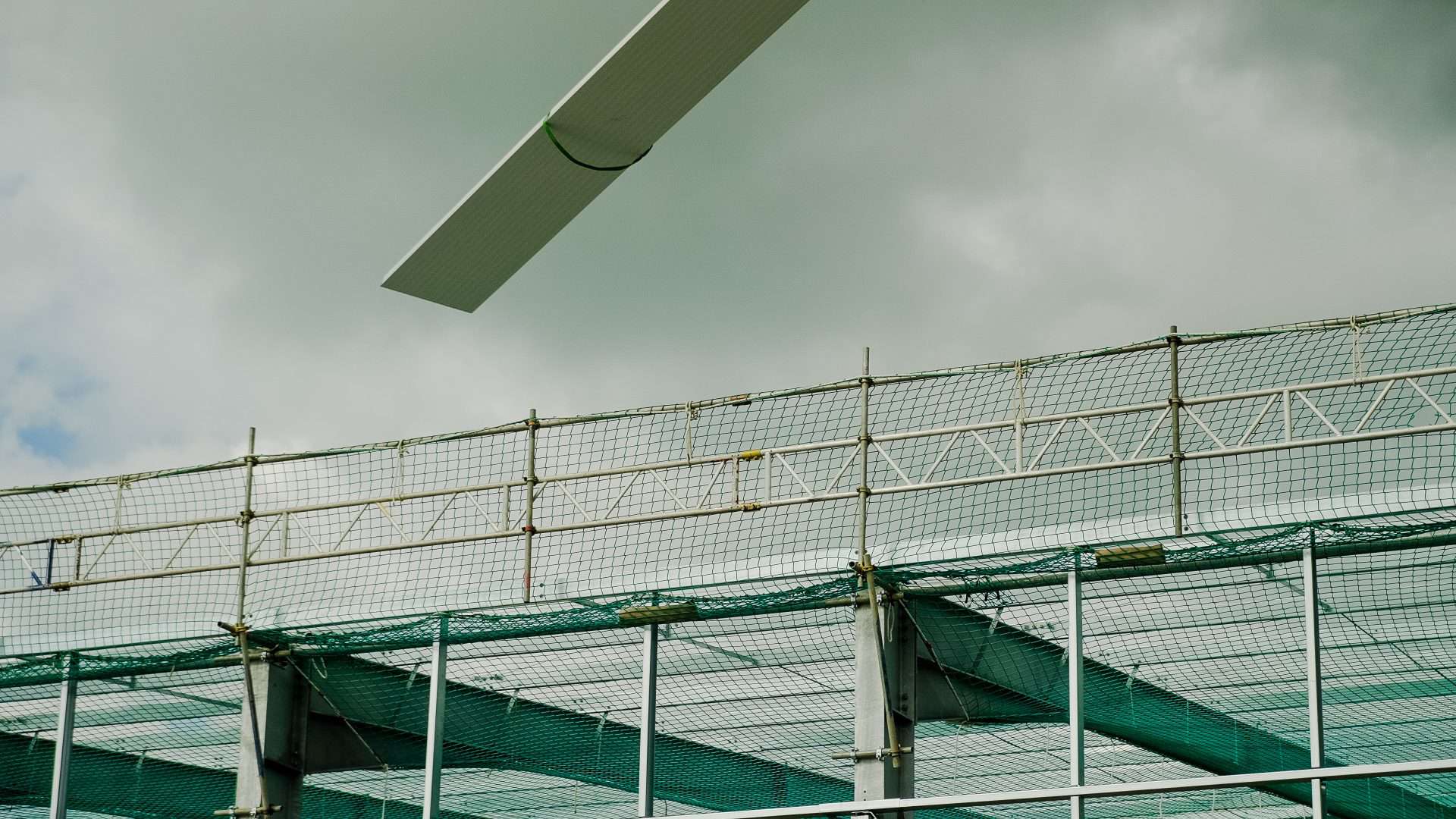
On any construction site where work is happening at height, there’s a risk of materials, tools, and debris falling to levels below. On an open rural development that risk is manageable with relatively straightforward controls. On an urban site, adjacent to a public footpath, a road, or occupied buildings, the consequences of a falling object reaching ground level can be catastrophic — for the person struck, for the principal contractor, and for the business operating from the site.
Debris netting is one of the most effective and practical ways to manage that risk. At Red Safety Netting, we install debris netting systems across construction sites of all types, from new build residential developments to commercial refurbishments and public sector projects. Here’s how these systems work and why they matter.
What Debris Netting Actually Does
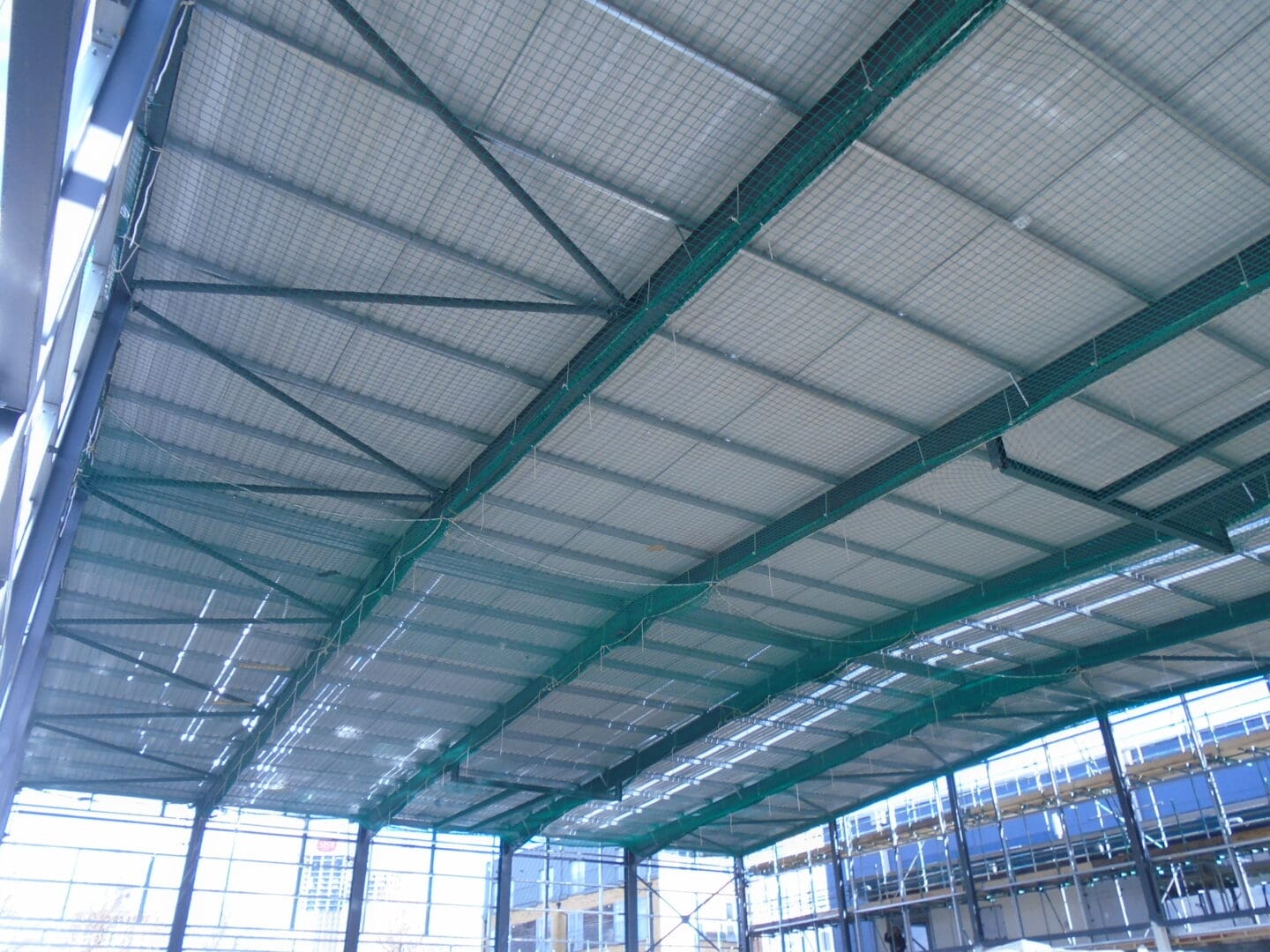
Debris netting is installed as a physical barrier — typically vertically around the perimeter of a building or scaffold structure, or horizontally beneath working platforms — to intercept falling materials before they reach lower levels or public areas. Unlike personal fall protection equipment, which protects the individual operative, debris netting protects everyone beneath the working area — other trades, site visitors, and members of the public passing adjacent to the site.
On a busy construction site, the sources of debris are varied and not always predictable. Offcuts of tile, lengths of timber, tools that slip from a grip, cement and mortar droppings, fragments of material during cutting or breaking — all of these are potential hazards that debris netting captures before they become a serious incident.
Perimeter Protection on Urban and Public-Facing Sites
The most critical application of debris netting is on sites that are adjacent to public areas. Where scaffold is erected close to a pavement, road, or occupied building, vertical debris netting installed around the scaffold perimeter creates a containment barrier that prevents falling materials from reaching the public realm.
This isn’t just a sensible precaution — it’s a legal obligation. The principal contractor has a duty under the Health and Safety at Work Act and the CDM Regulations to ensure that construction activities don’t create risks for people outside the site boundary. Debris netting is one of the primary means of discharging that duty on sites where working at height is taking place near public areas.
Red Safety Netting assesses each site individually to determine the appropriate netting specification — the mesh size, the load capacity, and the anchorage arrangement — for the specific hazards and adjacencies on that site. A site adjacent to a busy pedestrian area requires a different solution to a contained industrial site, and we specify accordingly.
Protecting Workers on Lower Levels
Debris netting also plays an important role in protecting workers operating at lower levels on a multi-trade site. On a new build residential development where roofing, brickwork, and external works are happening simultaneously, operatives working at ground level or on lower lifts are exposed to the risk of falling materials from above. Horizontal catch netting or debris fans installed beneath working platforms provide a secondary layer of protection for those workers.
This is particularly relevant on sites where it isn’t always practical to establish strict exclusion zones beneath working areas — where access routes, deliveries, or other work activities mean people are necessarily passing beneath elevated workplaces.
Integration with the Overall Fall Protection Plan
Debris netting doesn’t exist in isolation. On most sites, it forms part of a broader fall protection plan that includes edge protection, personal fall arrest equipment, and Mansafe netting. Red Safety Netting works with principal contractors and health and safety managers to ensure that the debris netting installation integrates with the other protective measures on site — covering the gaps that other systems leave, rather than duplicating protection where it already exists.
As a FASET-accredited contractor, all of our installations are carried out by trained, competent operatives and documented from the outset. Inspection schedules are maintained throughout the project, and our team is available to respond quickly if the netting needs to be adapted as the project progresses.