Access to elevated work areas must be safe and efficient, and you rely on HAKI Access Towers for modular, rapid assembly and robust performance across industrial sites. Their aluminium system gives you lightweight mobility and secure platforms that reduce fall hazards, provided you follow instructions and use competent staff; towers also meet relevant British and European standards for workplace access.
HAKI Access Towers – product overview
HAKI access towers combine a modular aluminium system with engineered steel components to give you flexible platforms compliant with EN 1004 and BS EN 12811. You can erect free-standing towers up to 12 m and extend higher with tie-ins (ensure you use ties when exceeding 12 m), configuring platforms for personnel or materials; this system is routinely chosen for petrochemical, power and refurbishment projects where speed and repeatability matter.
Modular design and configurations
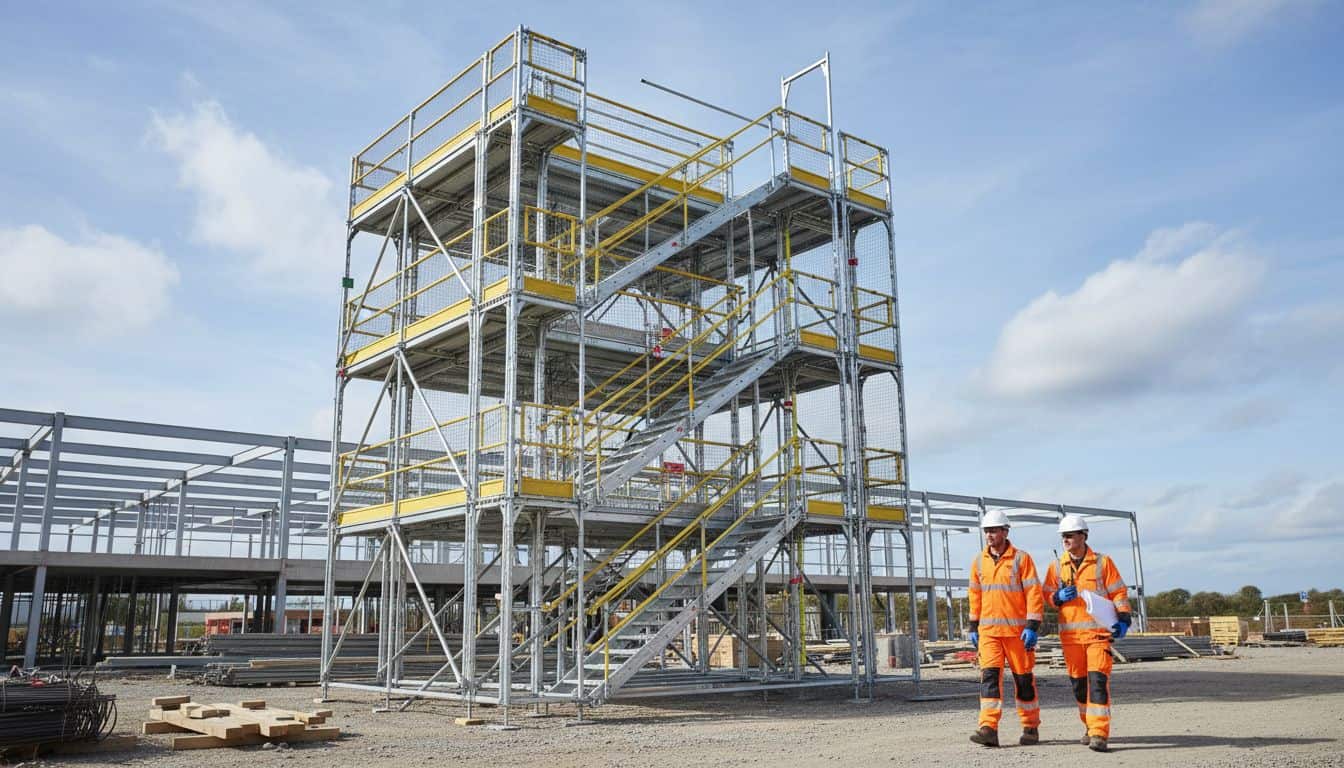
The system uses standard 1.2 m bays and interchangeable modules so you can build single-leg towers, twin-leg stacks, stair towers or bridging structures without bespoke fabrication. You can mix platform depths and guardrail arrangements, add stair units for logistics, and scale laterally or vertically to suit constrained access points, enabling rapid reconfiguration between tasks and reducing on-site downtime.
Materials, finishes and build quality
Key components are high-strength aluminium for weight-saving and hot-dip galvanised steel for load-bearing elements, while platforms use anti-slip decking and stainless fixings in corrosive zones. You should expect robust welds, EN ISO 1461 galvanising and factory-controlled tolerances that preserve alignment during repeated assembly and demolition, maintaining safety margins across long campaigns.
Aluminium delivers significant mass reduction-density ~2.7 g/cm³ versus steel at ~7.85 g/cm³-so you can transport and erect larger sections with fewer operatives, though you must account for aluminium’s lower modulus when assessing deflection and load paths. Hot-dip galvanising to EN ISO 1461 and optional 316 stainless fixings extend service life in coastal or chemical sites, while anti-slip phenolic boards or chequer-plate decks provide improved traction during wet or oily operations.
Safety features and fall protection
The towers give you multiple integrated safety measures: anchor points typically rated to 12 kN for personal fall arrest, fixed ladder cages or controlled access gates, and designated harness attachment locations on every working level. You can read more on design and performance in The Key Advantages of Haki Towers in Modern Construction, which outlines real-world deployments and testing protocols that demonstrate reliable fall-protection performance under site conditions.
Guardrails, toe boards and platform safety
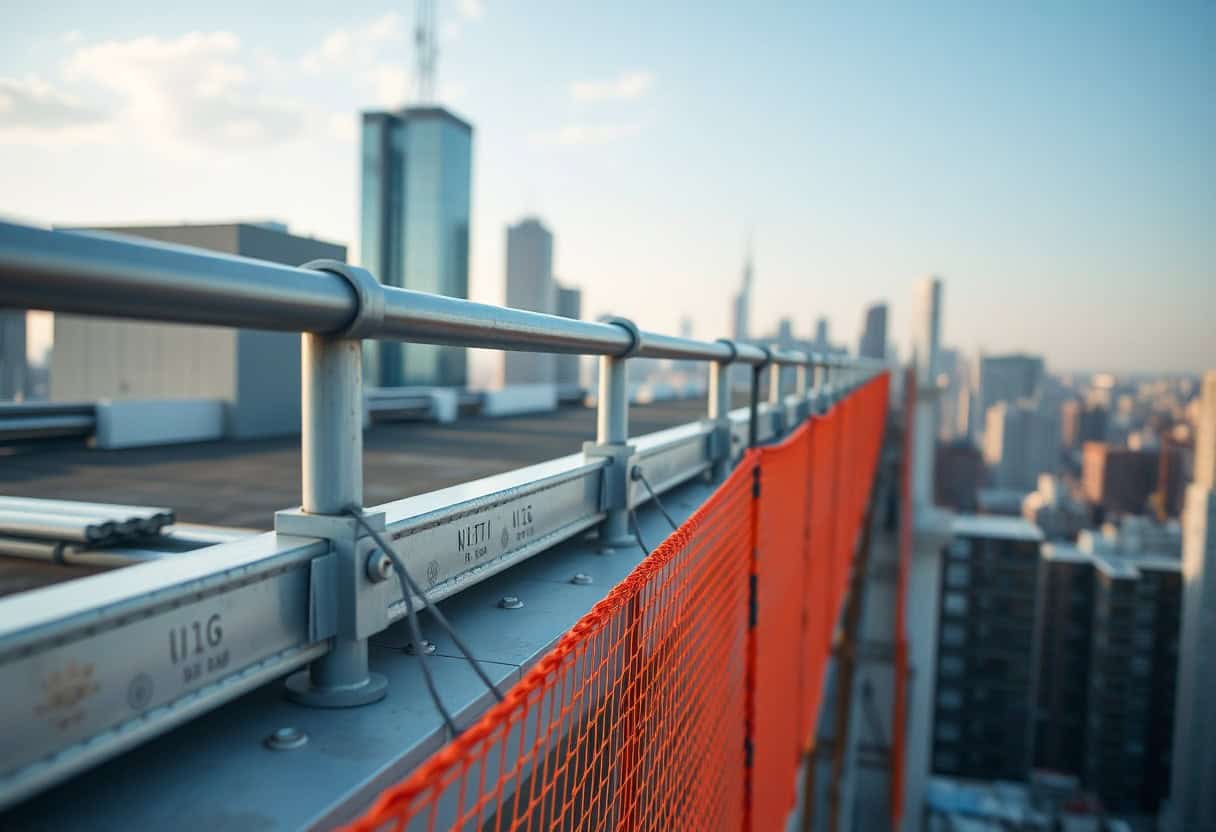
Your platforms should have top rails at about 1,100 mm, a midrail and toe boards of around 150 mm, meeting EN 13374 Class A edge-protection standards for access work. Manufacturers supply anti-slip decking and hand-rail continuity; you must ensure gates close automatically and that tool-lanyards are used on glass, cladding or when working at heights above 2 m to prevent dropped-object incidents.
Stability, load ratings and wind considerations
You need to check the published load rating – towers are commonly specified at 1.5-2.0 kN/m², or roughly 225-450 kg per bay depending on equipment – and stay within those limits. Temporary access units also carry manufacturer wind limits, typically around 10-14 m/s (22-31 mph) for unanchored setups; exceeding those values mandates tying off, ballast or dismantling.
For added detail, you should deploy outriggers and ballast per the assembly guide and use structure tie-ins where required: many manufacturers advise vertical tie-in intervals of about 4-6 m and horizontal ties every 6-8 m. Also, avoid adding wind screens without recalculating loads, and log inspections after any gusts or after lifting operations to maintain safe working envelopes.
Flexibility and site adaptability
You can adapt HAKI systems across diverse projects, from power stations to shipyards, thanks to modular components and compliance with EN 12811 for temporary works. Parts such as stair modules and guardrails let you customise platform widths (commonly 600-1,200 mm) and heights rapidly, and Access Solutions – HAKI Stair Towers & Edge Protection shows configurations that support safe, repeatable redeployment across multiple phases.
Rapid assembly, reconfiguration and transportability
For routine tasks you can erect a basic tower with two trained operatives in under 30 minutes using minimal tools; panels are lightweight and stackable for efficient transport. Reconfiguration to add stair modules or edge protection often takes less than an hour, so your team can respond to changing access needs without extended downtime, cutting mobilisation costs on multi-stage projects.
Use in confined spaces, uneven terrain and complex structures
You will benefit from adjustable bases and compact modules that fit through 900 mm doorways and inside vessels with diameters of 3-6 m, enabling safe access where traditional scaffolds cannot. Anchoring and levelling options let you maintain platform stability on slopes and uneven foundations while keeping passageways clear for other trades.
In tight or irregular environments you should specify screw jacks, outriggers and bespoke brackets to achieve safe clearances; for example, a maintenance team accessed a 5 m diameter boiler using a tailored HAKI stair tower and completed work 40% faster than with tube-and-fitting scaffolds. Always verify anchor points and load paths to avoid overturning or overloading, and document any bespoke fixings in your method statement.
Compliance, standards and certification
HAKI access towers are supplied with formal certification and traceable documentation so you can verify conformity on site; check the manufacturer’s declaration, the CE/UKCA marking, serial numbers and load ratings before use. Manufacturers commonly reference EN 1004 for mobile towers and ISO 9001 for quality systems, and you should retain certificates and inspection records to satisfy client audits, tenders and regulatory visits.
Relevant EN/ISO regulations and international approvals
EN 1004 covers mobile access and working towers, while EN 12811 defines performance for temporary works and is often cited for fixed scaffold interfaces. ISO 9001 demonstrates manufacturing quality control, and many projects require CE/UKCA plus local approvals such as ANSI/OSHA or AS/NZS compliance for export jobs – check project specifications to confirm which standards you must meet.
Inspection, testing and documentation requirements
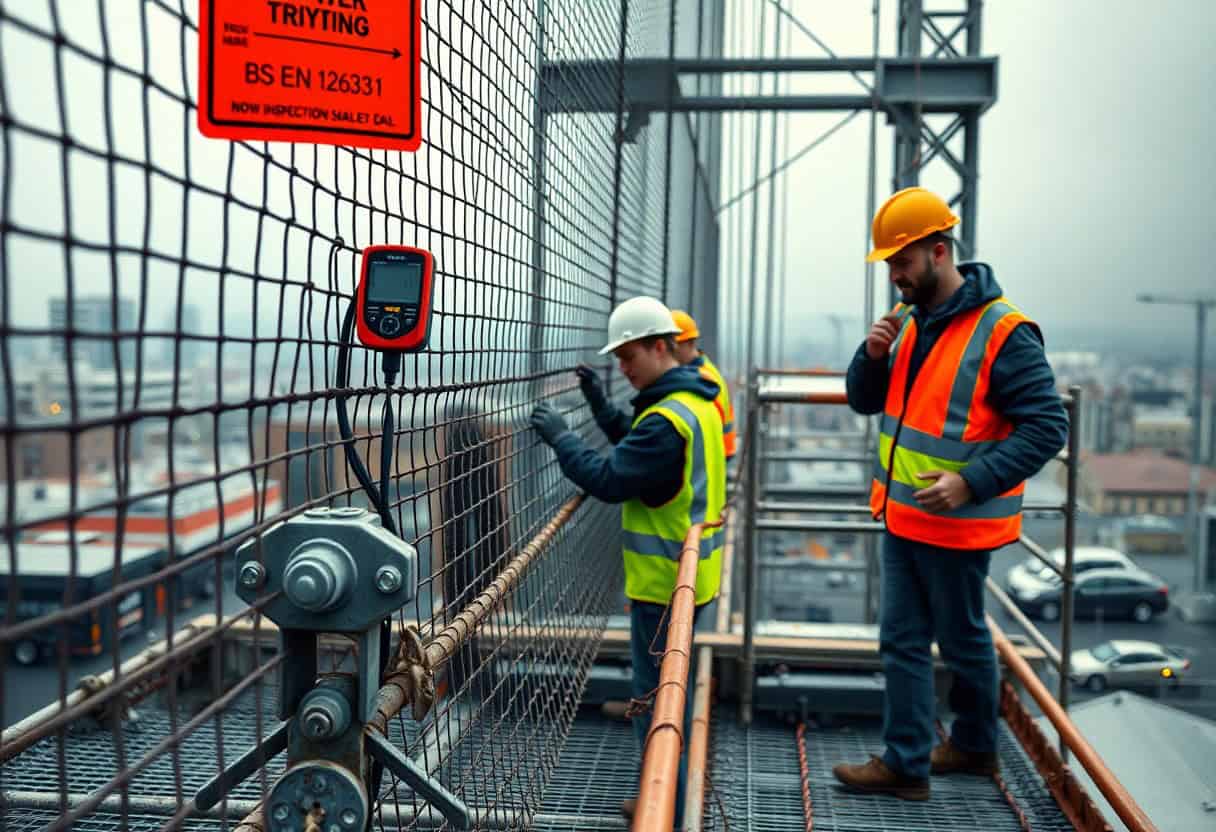
You should perform daily pre-use checks and arrange formal inspections by a competent person at least once every seven days and after severe weather, impact or alterations. Maintain a signed logbook with dates, inspector name, component serial numbers and remedial actions; tag any defective unit Do not use and remove it from service until repaired or replaced.
Typical inspection records include a photographic log, checklist items (outriggers, castors, locking pins, guardrails, platform planks, toe boards, ties and bracing), and any load tests carried out after suspected overloads. Keep certificates, test results and the scaffold register accessible on site for audits, and ensure the inspector’s competency is documented to support your safety case and contractual obligations.
Installation, training and operational best practices
You must follow the manufacturer’s sequence and site-specific RAMS when assembling HAKI towers, ensuring a firm, level base with outriggers or soleboards as required; PASMA-trained personnel should carry out daily pre-use checks and formal inspections at least weekly, and you should suspend work in high winds (typically gusts above 25-30 mph). Record all inspections, weight loads and tie‑in points to maintain traceability and legal compliance.
Erection, dismantling and safe working procedures
When erecting or dismantling, you should use a planned sequence, levering components with appropriate tools and working from secure platforms only; a two-person team can typically assemble a 3-6 m mobile tower in 20-40 minutes if bases are prepared. Fit guardrails, toe‑boards and ladder access, control materials to prevent dropping, and never exceed the manufacturer’s stated load or alter configurations without authorisation.
Competency, training and emergency/rescue planning
You must ensure operatives hold recognised tickets (for example, PASMA mobile tower training, typically a one‑day course) and that supervisors are competent to inspect and sign off; your emergency plan should name trained rescuers, list rescue equipment and include contact details for site first aid and emergency services. Practise rescues periodically and log outcomes.
Drill your rescue plan at least every six months and keep records of each exercise, training attendance and any corrective actions. Equip your site with a dedicated rescue kit (escape rope, controlled descent device, harnesses) stored accessibly, and appoint a minimum of two trained rescuers per shift for sites where tower work exceeds 2 m. Use toolbox talks to reinforce procedures after any change or near‑miss.
Maintenance, lifecycle management and cost factors
You must plan for regular upkeep to protect your investment in HAKI access towers, balancing routine checks with refurbishment. Typical actions include:
- Weekly inspections by a competent person
- Component replacement every 3-5 years for high‑wear items
- Refurbishment cycles at 10-15 years
Modular parts and stocked spares reduce downtime; see HAKI Scaffolding | Square. After scheduled refurbishment and part replacement you maintain lifecycle management and reduce long‑term costs.
Inspection schedules, spare parts and refurbishment
You must inspect towers before first use and then weekly, plus immediately after severe weather or any modification; log each check to demonstrate compliance. Keep critical spare parts-castors, base plates, pins and guardrails-on site so you avoid stoppages; many operators report ~90% interchangeability across HAKI modules. Plan a full refurbishment every 10-15 years, replacing worn pins and renewing coatings to extend usable life.
Rental vs purchase, ROI and total cost of ownership
You should compare hire fees against capital costs: typical hire rates range £15-£40/day while purchasing a tower can cost £800-£3,500 depending on height and accessories. If you expect >120-150 days’ use per year, purchase commonly improves ROI; otherwise hire reduces storage, inspection and maintenance burdens and lowers your total cost of ownership.
You can run a simple payback example: a 10m HAKI tower costing £2,400 with a hire rate of £30/day breaks even at 80 days (2,400 ÷ 30 = 80); add annual maintenance (typically 4-8% of purchase price) and storage to refine your figures. Factor in project schedules, average utilisation and potential downtime so your final total cost of ownership reflects real operational costs rather than headline prices.
Final Words
To wrap up, HAKI access towers give you safe, flexible access solutions for industrial sites, combining robust design, rapid assembly and modular adaptability to reduce downtime, enhance worker safety and ensure regulatory compliance; their engineered systems support varied loads and complex geometries, enabling you to implement reliable, scalable access programmes.