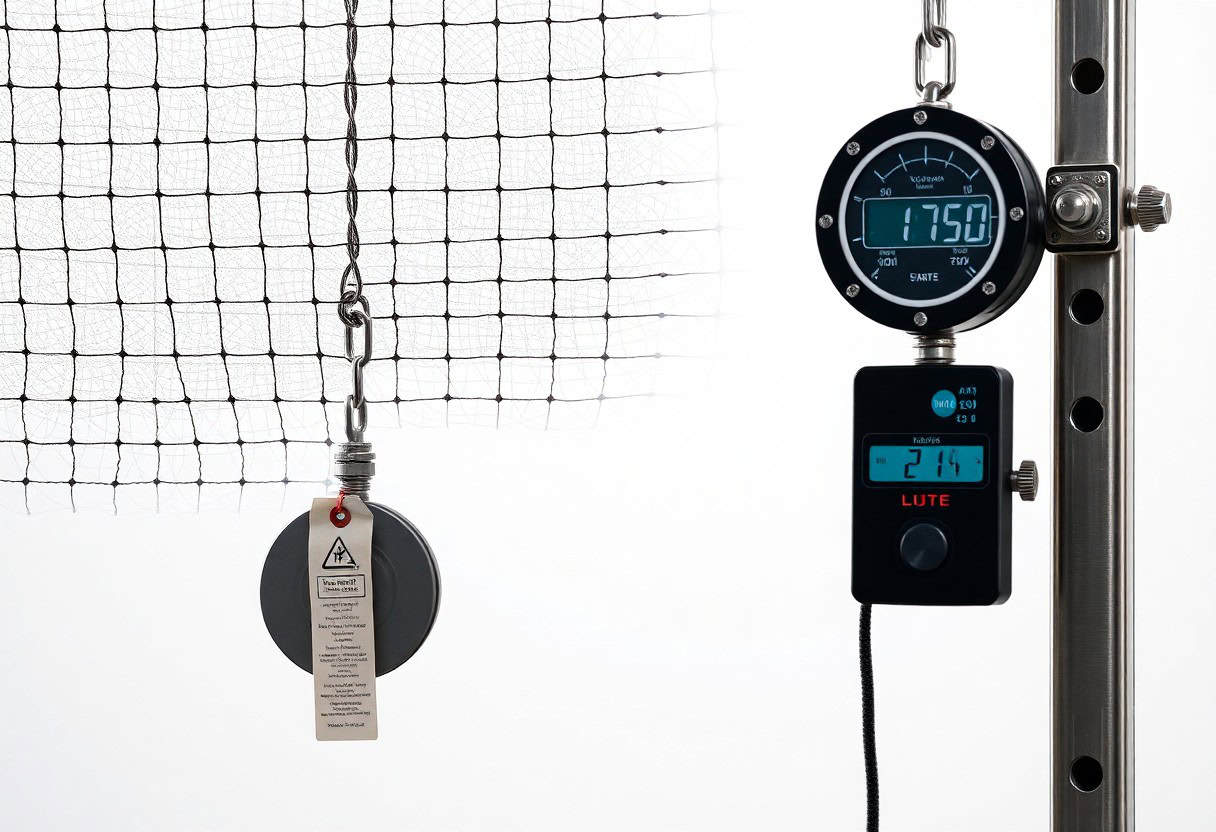
Load testing verifies whether your safety netting meets specified loads and reveals weak points; by simulating real forces you identify load-bearing limits and the risk of catastrophic failure so you can mitigate hazards. Certification provides independent confirmation of performance and legal compliance, offering assurance of safety. You should follow accredited test procedures, maintain regular inspections and keep records to ensure ongoing reliability and workforce protection.
Safety Netting: Definitions and Clinical Role
In practice, safety netting means giving patients clear, actionable advice on red flags, expected timelines and follow-up: you should set review points such as within 48-72 hours for evolving symptoms. When assessing systems-level risk you must also consider physical barriers and certification; see The Importance of Testing and Certification / August 2021 for load-testing parallels and how certification supports reliable performance.
Types and scope of safety netting
Safety netting ranges from brief verbal advice in primary care to formalised discharge plans and documented follow-up in secondary care; you will vary scope by acuity, comorbidity and social factors. Use targeted checklists for red flags and set explicit review mechanisms for uncertain diagnoses. The distinctions determine escalation pathways.
- Primary care advice
- Emergency department safety-netting
- Specialist follow-up
- Community and home-based monitoring
| Type | Example / Scope |
| Brief verbal | Single appointment advice with clear red-flag list |
| Documented plan | Discharge letter with review date and actions |
| Telephone/telehealth | Remote check at 24-72 hours for symptom progression |
| Integrated pathway | Specialist clinics with fast-track referrals for deterioration |
Clinical contexts and risk stratification
In paediatrics, urgent care and primary settings you must tailor safety netting to baseline risk: frailty, immunosuppression and comorbidity increase the threshold for active follow-up. Use simple, documented criteria so that you and colleagues act consistently and reduce missed deterioration.
For more depth, combine structured tools-early warning scores such as NEWS2 in acute settings and symptom checklists in outpatient clinics-with local referral thresholds: you should flag anything meeting predefined red flag criteria, arrange urgent referral within 24 hours when indicated and document the agreed review plan to close the loop between teams.
Load Testing: Concepts and Objectives
You verify that nets, anchors and fixings perform to design by subjecting them to controlled loads; common practice applies a static proof load of 1.25× the rated load for 10 minutes and follows up with dynamic checks to expose fatigue points. You should consult guidance such as Understand The Basics Of Load Test Requirements for procedural detail and documentation expectations.
Purpose, scope, and KPIs
You define purpose as validation of structural integrity, scope as nets, borders, anchors, connectors and installation interfaces, and KPIs to include pass/fail rate, maximum static deflection, permanent elongation percentage, and cycles to failure. Typical measurable targets you can set are pass rate ≥99%, deflection windows expressed in millimetres (commonly 200-400 mm), and inspection intervals tied to service hours or load cycles.
Acceptance criteria and risk thresholds
You set acceptance criteria around no rupture, intact stitching and connection integrity; design allowances often permit only minimal permanent deformation, typically within the product’s specification (commonly ≤5% permanent elongation). Any safety-critical deterioration-corroded anchors, torn mesh, or lost capacity-should trigger immediate removal from service and re-test or replacement.
For practical application you classify findings: acceptable (within design limits and recorded), reparable (minor damage repaired and re-tested under load), and reject (loss of capacity beyond a conservative threshold, often >20-25%), with rejected items replaced and traced. You should log test values, serial numbers and corrective actions so that trend analysis can reveal progressive wear-this lets you schedule preventive replacement before a component reaches the dangerous zone.
Testing Methods and Protocols
When you assess nets, standards such as EN 1263‑1 guide both static and dynamic methods: static proof loads typically apply between 2-10 kN per anchor, while dynamic drop tests commonly use masses of 50-100 kg dropped from 1-3 m to reproduce impact energy. You should combine laboratory tests with on‑site validation, ensuring instrumentation is calibrated and results traceable to certification bodies for meaningful comparison.
Simulated vs. real-world scenarios
You rely on lab simulations to control variables-drop height, mass, temperature-and generate repeatable data, yet field trials over 4-12 weeks reveal wear from UV, abrasion and fastening movement. Pay attention to anchor pull‑out or seam failure in real installations, because these failure modes often do not appear in short, idealised tests and can determine whether a certified net performs safely under your site conditions.
Test design, sampling, and repeatability
You should design tests with 3-5 specimens per lot, run a minimum of three loading cycles, and expect inter‑sample variation to fall within 10%. Randomly select nets across production batches, document fixture geometry and boundary conditions precisely, and use the same data acquisition rates to ensure repeatable, comparable outcomes for certification and site acceptance.
In practice, you adopt recognised sampling schemes such as ISO 2859, condition samples (UV, salt spray, −20°C to +40°C) before testing, and calibrate load cells annually. Use basic statistics (mean, SD, ANOVA) to spot outliers; acceptance often requires zero critical failures across replicates and defined remediation if variability exceeds thresholds, so your quality plan ties directly into certification and site safety decisions.
Equipment, Instrumentation, and Controls
Your test rig should combine a rigid load frame, hydraulic or electromechanical actuators, suitably rated load cells and a high‑speed data acquisition system; typical setups use load cells in the 0-100 kN range and sampling at 1 kHz. You must fit protective guards, fail‑safe interlocks and an accessible emergency stop, and ensure the control software logs test sequences, operator actions and time stamps to support traceability and post‑test forensic review.
Measurement tools, calibration, and traceability
You should equip yourself with load cells, strain gauges, LVDTs and calibrated extensometers, each carrying a current calibration certificate traceable to UKAS/NPL standards. Aim for calibration intervals of 12 months or before any critical series, with documented uncertainties typically better than ±1%. Always record serial numbers, calibration dates and correction factors in your test report so you can demonstrate chain‑of‑traceability and measurement uncertainty to clients or auditors.
Environmental and procedural controls
You need environmental control to stabilise results: condition specimens for 24-48 hours at 20 ±2 °C and 50 ±5% RH, keep ambient drafts below 0.5 m/s, and maintain consistent clamp torque and preload (commonly ~5% of expected load). Finalise test speed, dwell times and sampling settings in a written procedure and enforce them for every sample to avoid variability caused by uncontrolled conditions.
In practice, you should run a documented preconditioning log, calibrate environmental chambers and log sensor outputs during each test; for example, record chamber temperature and humidity at 30‑second intervals and include clamp torque values and operator IDs. Deviations-such as a 3 °C drift or inconsistent preload-must be annotated and can justify repeat tests. Ensuring this level of procedural discipline prevents non‑conformances, reduces rework and protects you from liability when net performance is borderline.
Certification Standards and Regulatory Pathways
You must navigate multiple routes: CE/UKCA marking for market access, national regulations like the UK’s LOLER and PUWER, and third‑party conformity assessment where required; for lifting gear, thorough examination intervals are typically every 6 months when lifting people and every 12 months otherwise. Suppliers often pair type testing with documented conformity; see A Beginner’s Guide to Load Testing for Lifting Equipment for practical test procedures and examples.
Applicable national and international standards
You will encounter standards such as EN 1263 for safety nets, EN 13155 for non‑fixed lifting attachments and ranges of EN/ISO codes covering slings and components; the Machinery Directive (2006/42/EC) and PPE Regulation (EU) 2016/425 can also apply depending on use and classification, so align your design and test regime to the specific standard clause numbers cited in procurement or contract documents.
Documentation, auditing, and conformity assessment
You need retained test certificates, calibrated load‑cell records traceable to an accredited lab (for example UKAS), EC/UK Declaration of Conformity, installation and inspection logs, and a clear chain of traceability (serial numbers, batch reports); auditors will check that technical files match in‑service test outcomes and that corrective actions were implemented after any failures.
For more detail, your technical file should include design calculations, material certificates, FEM or fall‑arrest simulations, non‑destructive test reports and proof‑load test data – many organisations adopt a proof load of 1.25× the rated working load for in‑service verification and retain calibrated load‑cell certificates and test photos; notified/approved bodies will sample these records during surveillance audits, and unannounced site checks commonly focus on calibration status, previous failure reports and the presence of up‑to‑date inspection tags or reports.
Data Analysis, Reporting, and Decision Frameworks
You should cleanse and validate test logs, apply Shapiro-Wilk for normality, and switch to non‑parametric methods when needed; use Weibull or log‑normal models for life data and Arrhenius for accelerated ageing. Aim for sample sizes of n≥30 where possible, report 95% confidence intervals and p<0.05 for claims, and calculate the 5th percentile capacity as a safety threshold to drive decisions and remediations.
Statistical assessment, failure modes, root-cause
You must quantify failure modes with coded categories (knot slip, UV embrittlement, seam tear), run Pareto to prioritise, and apply Kaplan-Meier or censored Weibull for in‑service data. Use FMEA and Ishikawa workshops to link statistical clusters to process causes; for instance, a Weibull shape β<1 signals early‑life defects and points you to manufacturing or material issues to investigate first.
Reporting templates and stakeholder communication
Your report template should include an executive summary, KPI table (MTTF, 5th percentile, safety factor), clear pass/fail vs standard, boxplots and failure‑mode charts, plus recommended actions and timelines. Provide a one‑page escalation card for management with immediate safety hold triggers and a technical appendix for engineers so stakeholders get exactly the detail they need.
Structure the template so the first page states the decision matrix: if 5th percentile <70% of specified load then impose a 24‑hour safety hold and root‑cause investigation; include raw CSV links, method appendix, and a timestamped audit trail. Assign roles (Safety Engineer, QA Manager, Client Rep) and embed automated dashboards (Power BI/Excel) to refresh metrics daily, ensuring rapid, documented actions when dangerous thresholds are breached.
To wrap up
On the whole, you should treat load testing and certification for safety netting as a systematic verification that your netting will perform under expected loads and conform to relevant standards; you must rely on accredited test methods, certified materials, documented procedures and competent inspectors, keep clear records, and schedule periodic reassessment to manage degradation and changing site conditions.